Could US Marines sustain a war with China? Officers warn of Pacific weaknesses
This piece, originally published by South China Morning Post, quotes CSP Senior Fellow Grant Newsham.
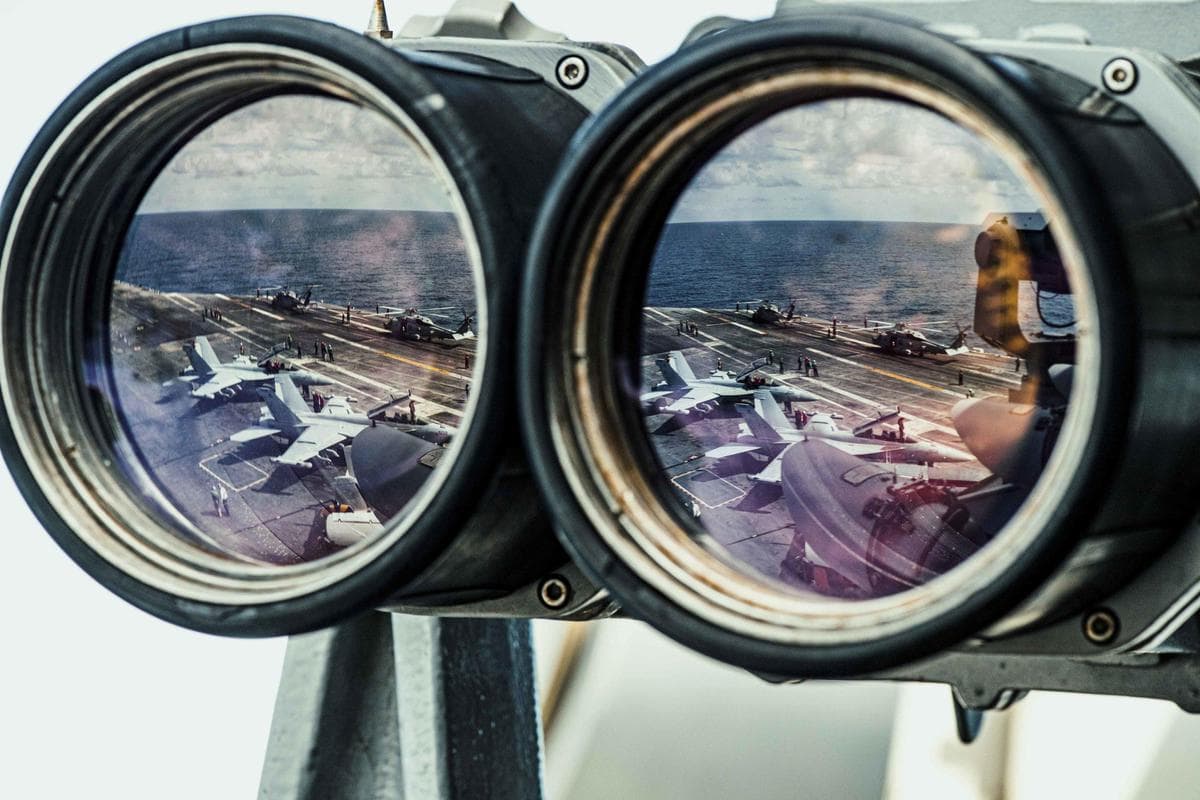
SOUTH CHINA SEA (April 6, 2021) – U.S. Sailors prepare for flight operations on the flight deck of the aircraft carrier USS Theodore Roosevelt (CVN 71) April 6, 2021. The Theodore Roosevelt Carrier Strike Group is on a scheduled deployment to the U.S. 7th Fleet area of operations. As the U.S. Navy’s largest forward-deployed fleet, 7th Fleet routinely operates and interacts with 35 maritime nations while conducting missions to preserve and protect a free and open Indo-Pacific Region. (U.S. Navy photo by Mass Communication Specialist 3rd Class Alexander B. Williams)

Sklenka warned that in a conflict Chinese attacks on American bases and supply routes could isolate forward-deployed marines, while Mitchell questioned whether dispersed units could relocate quickly enough to evade Chinese strikes or secure permission to operate from allied territory.
Teodoro’s remarks illustrated a broader concern raised by Mitchell, an instructor at the Marine Corps Command and Staff College, who said peacetime access to allied facilities did not guarantee permission for military operations during a conflict.
“Coalition fracture can deny access more effectively than a missile barrage,” he wrote.
Grant Newsham, a retired US Marine Corps colonel, said the question of where dispersed units could deploy “was not well thought out in the first instance”, although the US Marine Corps had since made “considerable progress” with Japan and the Philippines.
Read more HERE.

- Could US Marines sustain a war with China? Officers warn of Pacific weaknesses - November 12, 2026
- US-China-Russia Hypersonic Weapons Race Accelerates - November 6, 2026
- Marianas midterm vote a referendum on China’s murky influence - November 2, 2026