Dying of thirst in the Middle East?

Originally published by AND Magazine
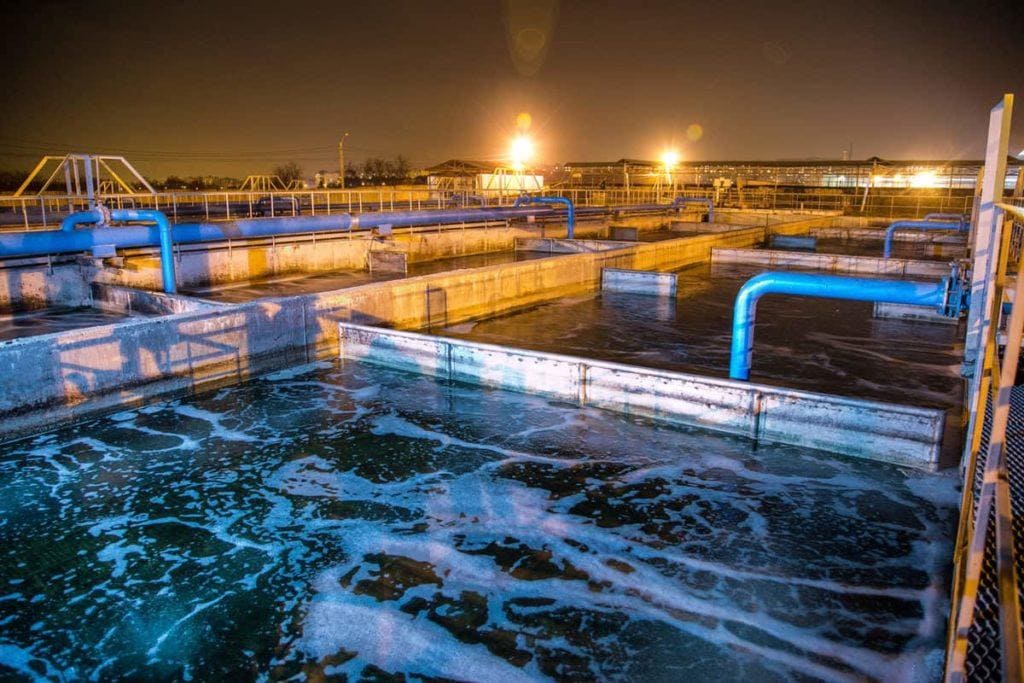
Modern wastewater treatment plant of chemical factory at night. Water purification tanks
History never fades away in the Middle East. What is ancient history to most Americans is alive and well in the minds of the people of this region. We would do well to remember that.
In 1187, knights of the Crusader kingdoms in what is now Israel and Lebanon marched out into the desert to confront Islamic forces under the command of the Muslim General Saladin. What ensued sealed the fate of the Christians in the Middle East.
As the Crusaders advanced, Saladin retreated and drew them into the desert. As he withdrew, however, Saladin posted cavalry at all springs along the route, denying the Christian forces access to water. His troops also set the brush on fire, choking the Crusaders in smoke. It was July. The heat was intense. The heavily armored knights staggered forward. Their water supply was soon exhausted. They spent three days under these conditions.
When Saladin finally stopped retreating and prepared to give battle at a place known as Hattin, the Christians were drained, dehydrated, and demoralized. The fight was over before it started. By the end of the battle, the Crusader army no longer existed as a fighting force. Most of the nobility had either died in combat or fallen into captivity. Only a handful escaped to the coastal fortresses.
Nobody expects the Iranians to find some magic means of depriving American forces of water and winning a similar victory. We would do well, however, to consider that the Iranians have not forgotten the lessons of Hattin and that they fully understand the strategic importance of water in the Middle East.
Most of our key allies in the Middle East in the ongoing hostilities are completely dependent upon desalination plants to turn seawater into fresh water. Without these plants, these nations are like the Crusaders at Hattin. They cannot survive. Their destruction is guaranteed.
We are talking about 100 million people. Kuwait gets ninety percent of its drinking water from desalination. Oman eighty-six percent. Saudi Arabia seventy percent. Without these plants, these nations would become uninhabitable within days.
On March 2, Iranian missile debris struck a power station in Fujairah in the UAE that feeds one of the world’s largest desalination facilities. Interceptor fragments also started a fire at Kuwait’s Doha West power and water desalination complex.
Since then, we have moved to an entirely new phase. The Iranians, who claim we struck a desalination plant in their country first, have now moved to directly targeting desalination plants in Gulf nations. A desalination plant in Bahrain was struck yesterday. Bahraini authorities admit “material damage” but claim there will be no disruption from the attack. It remains to be seen how true that is.
This is only the beginning. The locations of every plant in the Gulf are well known. You can pinpoint them on your laptop using Google Earth. There is no hiding them.
The Invisible Siege
If desalination plants suffer major damage from attacks, they may be offline for years. The Israelis took out major desalination plants in Gaza when they retaliated for Hamas attacks on Israel. Most of those plants are still offline. Overall, fresh water supplies in Gaza are still only roughly half of what they were before Israeli attacks, even with efforts by the United Nations and others to assist.
Also, understand that Iranian attacks are unlikely to end anytime soon. Iran operates under the Mosaic Defense doctrine. There are thirty-one autonomous provincial commands, each with independent targeting authorities. These commands will continue to fight even without orders from Tehran. They may no longer have the use of ballistic missiles or jets of their own, but the Iranians can keep making cheap, relatively unsophisticated drones in workshops, private homes, and schools for a very long time. Just as Hamas has cobbled together rockets in Gaza for years despite Israelis attacks, the Iranians can continue to produce munitions capable of destroying commercial desalination plants for a very long time.
The UAE reportedly has also now struck a desalination plant in Iran. Iran may have already responded, although the situation remains fluid. In any event, reprisal is guaranteed. The genie is out of the bottle. We are about to find out how easy it is to die of thirst in the Middle East.

- The threat of Iranian attacks inside the United States - March 12, 2026
- French poetry and sleeper cells - March 11, 2026
- Dying of thirst in the Middle East? - March 9, 2026