Greeks, Persians and the next front in this war

Originally published by AND Magazine
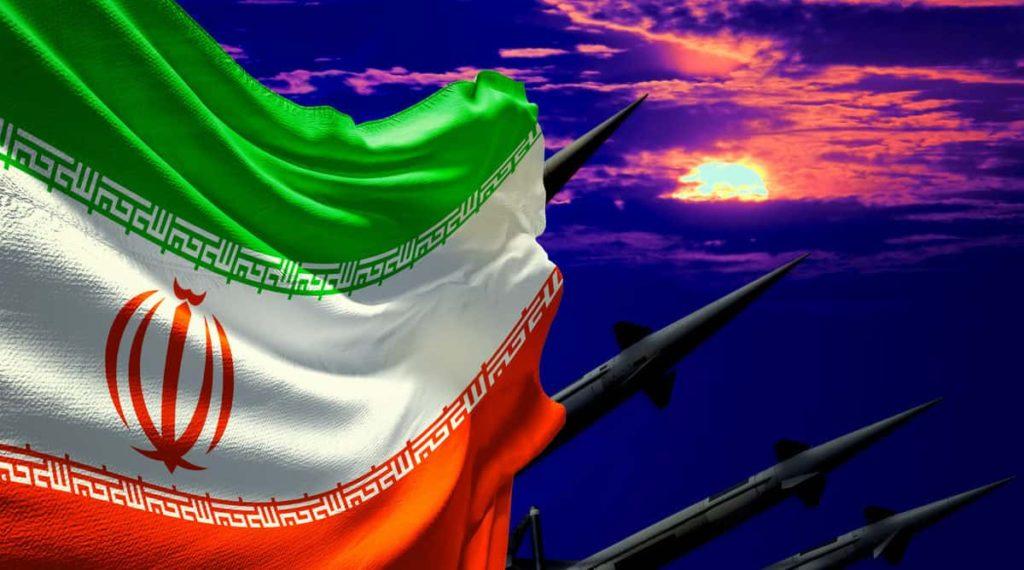
Flag of Iran and Nuclear missiles on sunset sky background
The Greeks have been fighting the Persians probably longer than anybody, so it seems somehow fitting that the latest front in the current war with Iran may be in Greece.
The Greek police just arrested a 36-year-old man at Eleftherios Venizelos Airport in Athens on suspicion of spying for Iran at the Souda Bay, Crete naval base. The suspect is of Georgian descent and a native of Azerbaijan. According to Greek authorities, he was in direct contact with his handlers in Iran via an encrypted Internet application. After his arrest, the Greeks found a large number of photos of the Souda Bay naval base on his phone.
Souda Bay is a NATO base in Crete. It is a key facility in support of ongoing U.S. military operations in the Middle East. On its way to its current station in the Mediterranean, the American nuclear aircraft carrier the Gerald R. Ford stopped in Souda Bay for resupply.
The individual arrested had apparently been under surveillance by Greek intelligence since his arrival in country. He arrived in Athens on February 3rd from Düsseldorf and then took a connecting flight to Chania in Crete. In Chania, he stayed in a room at a local hotel with a direct view of the Souda Bay naval base. He was also observed driving a rental car around the perimeter of the base and taking photographs.
On March 1st, the suspect Iranian asset traveled to Athens by air and went to the airport there. Believing he was preparing to leave the country, the Greek authorities then arrested him. It now appears he may not have been leaving the country but had gone to Athens to meet additional Iranian assets coming into Greece. The person arrested was in Crete when the USS Gerald R. Ford transited Souda Bay, and authorities believe he may have surveilled the vessel and photographed it while it was in port.
Indications are that this is not an isolated incident. Last summer, another Azerbaijani national was arrested in the same area on suspicion of spying for Iran. That individual also stayed at a hotel overlooking the base, paid in cash for all his expenses, and appears to have monitored the movements of NATO vessels.
At about the same time last summer, another Azerbaijani national was arrested in Paphos, Cyprus. He was apparently spying on military installations in Limassol and Paphos. Official court documents in the Cyprus case indicate that the individual was working for Iran’s Islamic Revolutionary Guard Corps (IRGC).
That individual was found in possession of three mobile phones, a professional-style camera with a lens for long-range photography, tripods, notes, and computers. He was no amateur.
All of this is consistent with my own personal experience working against Iranian intelligence. The Iranians are methodical and organized, and they plan ahead. They prepare targeting packages in the same way the American military does, and they prepare in advance for attacks on critical targets.
The Iranians also have good tradecraft. Many Azeris speak Farsi and have similar appearances to Iranians. It is therefore possible to put Iranian assets under Azeri cover and have them convincingly live their cover and escape detection. The fact that all the assets mentioned above appear to have paid in cash also shows a focus on avoiding detection.
Credit cards require all sorts of backstopping that may be penetrated by sophisticated Western intelligence services. Cash is effectively untraceable, and in a place like Greece, many hotel owners may not even report income received in cash because they do not want to pay taxes on the income. This means operatives paying in cash have a better chance of remaining undetected.
The big question is, of course, how many more Iranian assets are out there and how many targets have they cased for possible attacks. Those targets are unlikely to be confined to the Mediterranean.
A little over a month ago, the Turks arrested six people, including at least one Iranian national, on suspicion of spying for Iran. Those individuals are believed to have been reporting to Iran’s Revolutionary Guard and are accused of gathering information on military bases and other sensitive sites in Turkey. The targets surveilled by these Iranian assets included the American airbase at Incirlik in southern Turkey. Members of this Iranian team had attended special drone training programs in Iran. They had also been involved in moving Iranian drones into Cyprus.
There is no ambiguity about the Iranian intent to hit American targets wherever they can. Speaking earlier this year, Iran’s parliamentary speaker, Mohammad Bagher Ghalibaf, warned of such strikes.
“In the event of an attack on Iran, both the occupied territories and all American military centers, bases, and ships in the region will be our legitimate targets,” Qalibaf said during a parliamentary session.
The longer this war goes on, the more chance it will broaden. The next front? Everywhere.

- Dying of thirst in the Middle East? - March 9, 2026
- The shadow war begins - March 6, 2026
- Greeks, Persians and the next front in this war - March 4, 2026