Inside the Antifa Militant Network
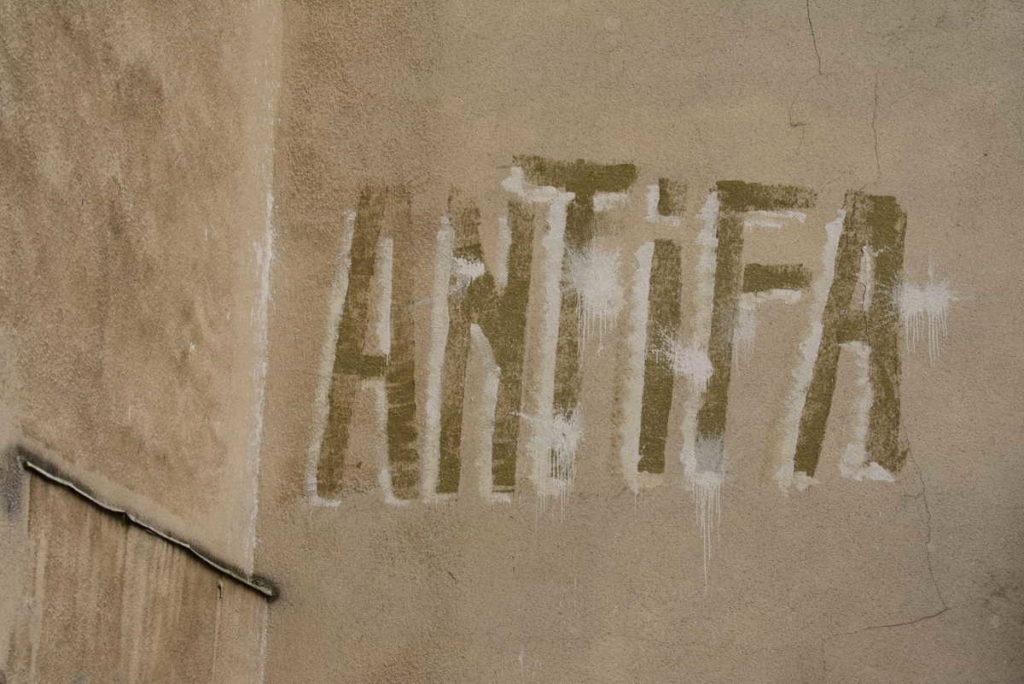
Antifa graffiti on a tan wall in Warsaw

The following is an edited transcript of an interview between CSP Director for Homeland Security and Counterterrorism Kyle Shideler and Christopher Rufo.
Rufo: Kyle, you and I first got to know each other a number of years ago at the Claremont Institute fellowship, and this was during wave one of the Antifa riots in Portland. I think it’s fitting that we now reconnect on wave two of the Antifa riots all over the country. Before we get into that, I hope you can introduce yourself, tell us a little bit about what you’ve been working on, and help us set up this conversation about these pressing events.
Kyle: My name is Kyle Shideler. I am the Senior Analyst and Director for Homeland Security and Counterterrorism Programs at the Center for Security Policy, where I oversee all of our research with a primary focus on domestic groups that are targeting national security, both from a kinetic standpoint—so terrorism—but also from a non-kinetic standpoint. I look at groups that are engaged in things like subversion against the U.S. government and the U.S. Constitution. The Center for Security Policy’s approach has always been to understand the ideology; we feel that if we understand what a threat actor believes, we can understand how they’ll operate. From there, you can start doing predictive intelligence on what they’ll do and then try to stop them. So I research, I write, I provide briefings to local and state law enforcement, and I try to assist them wherever I can. That’s it in a nutshell.
Lomez: Kyle, nice to meet you. I’m honored to have you on the show, and this is an important topic. Antifa has been this insidious force, kind of operating behind the scenes of American politics for years. They’ve become more prominent and more salient, and we’re seeing them more often now than we used to. But that question you just posed—which is, we’re trying to understand what these groups believe—okay, we hear all the time that Antifa is an idea, right? And obviously, on a straightforward level, they are anti-fascist. But what does that actually mean? What do they believe? What is animating their politics? Is there some coherent ideological through line that we can identify, or is it, as a lot of people on the Right, myself included, see them as merely these shock troops, these ground troops for the Left, who operate according to whatever ideology is most convenient at any given time in order to push back against whatever the Right might be doing?
Kyle: If you look at their writings, most of the Antifa groups—Antifa is inherently a united front—so you’re going to have a wide variety of revolutionary leftists organizing under the Antifa banner. But the vast majority of them are going to be anarchists or what’s called autonomous Marxists. This is an ideology that came out of Italy and Germany in the 1980s, and essentially what they said was, we’re tired of old, stodgy communist parties telling us that we have to do a bunch of boring organizing. We want it now. And so they came up with this concept of living autonomously, meaning they want to create spaces where they can live their ideology in real life.
Read more HERE.

- Anarchists call for solidifying gains, expanding violent insurgency - February 5, 2026
- Shideler: Resistance to Immigration Enforcement Is Fierce in Minnesota - February 2, 2026
- The Revolution Is On in Minnesota - January 26, 2026