Maybe we ought to worry about these drones

Originally published by AND Magazine
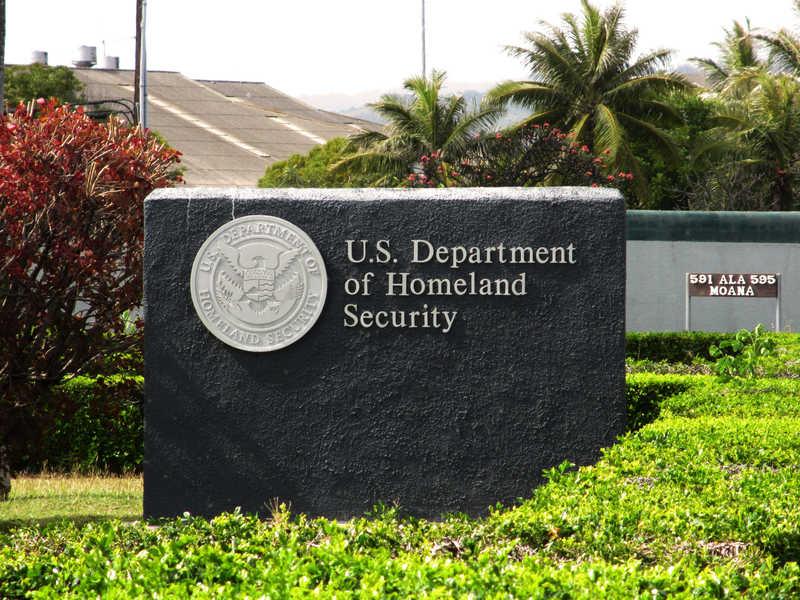
US Department of Homeland Security - Sign on Oahu, Hawaii.
On the morning of December 7, 1941, at 7:02 AM, at a radar station on Oahu, Privates Joseph Lockard and George Elliott detected a large flight of planes headed toward the island. They continued tracking them until around 7:40 AM, when the signal was lost due to background interference. After their initial detection of the planes, the men at the radar station quickly reported their findings to the information center at Fort Shafter. At the time, Private Joseph McDonald and newly assigned Air Corps Lieutenant Kermit Tyler were on duty.
Lieutenant Tyler advised the men at the radar station not to worry. He assumed the planes were incoming American B-17 bombers. No alarm was sounded. Roughly 45 minutes later, the air raid on Pearl Harbor began.
The proper response to a warning of this type is not to assume there is nothing to worry about. The proper response is to stand to – just in case.
We might want to remember that right now, as drones are swarming all over sensitive military installations in this country, and tensions are rising worldwide. The time to take this seriously is not after the attack has occurred but before.
A U.S. Air Force Base that houses B-52 bombers capable of carrying nuclear weapons detected “multiple unauthorized drones” in its vicinity earlier this month, according to Fox News Digital.
“Barksdale Air Force Base detected multiple unauthorized drones operating in our airspace during the week of March 9th.
“Flying a drone over a military installation is not only a safety issue, it is a criminal offense under federal law.”
“Base officials are working closely with federal and local law enforcement agencies to investigate the drone sightings.”
“The security of our installation and the safety of our people are top priorities, and we will continue to vigilantly monitor our airspace.”
A Barksdale AFB spokesperson speaking to Fox News Digital
Mick Mulroy, former deputy assistant secretary of defense for the Middle East, told ABC News it didn’t look like an average drone enthusiast. “It looked like this was deliberate and intentional to see just how they would react,” he said. “Seeing this probe on a base in the United States is very troubling.”
And the drones aren’t just over a nuke base in Louisiana. Unidentified drones were also detected over the Washington, D.C., Army base where Secretary of State Marco Rubio and Defense Secretary Pete Hegseth live. A source close to the matter confirmed to WTOP News that several unidentified drones were spotted above the base in a single night in mid March. A spokesperson for the U.S. Army Military District of Washington confirmed he was aware of reported drone sightings over Fort McNair and nearby areas and said law enforcement was investigating.
“Our top priority is the safety of our service members and civilian personnel that work and live on the base,” the spokesperson said.
“It’s a significant security concern,” John Torres, former special agent in charge for Homeland Security Investigations in D.C. and Virginia, who now leads security and technology consulting for Guidepost, told 7News. He said drones could be used for everything from surveillance to carrying out attacks.
“There’s such a wide range of options, none of them really good as to why there would be a drone in an area like that — especially over a military base where there are lots of sensitive activities going on.”
“You have to take all of these incidents very seriously, especially in times like this,” Torres said. “In my world and working in law enforcement, you don’t assume anything, and you don’t believe in coincidences either. And so you’re always going to start with the premise: there’s bad intent here.”
This is not the first time we have detected drones over sensitive military installations. Roughly eighteen months ago, there was another spate of such sightings, some of which at least were traced to Chinese nationals. In those instances, the smell of espionage was overpowering.
Despite all this, there appears to be no organized national effort to address the problem. A few individuals are occasionally picked up, and sometimes they are prosecuted. No one seems to be making any attempt to address the issue comprehensively, and as evidenced by the most recent intrusions, we still don’t seem to have in place any defenses or policies to prevent this kind of thing from recurring.
Drones over our bases may mean somebody is gathering intelligence in preparation for attacks on these installations. In that case, the drones not only can gather photographs and data from other sensors but also allow adversaries to evaluate our security protocols and response times.
Drones over our bases may also be rehearsing for actual attacks. Drones have been used as offensive weapons for years in Ukraine. Kamikaze drones are currently setting the Persian Gulf on fire. The next time drones are detected over a base, they may not simply slip away into the night and leave us wondering why they were there. They may begin to strike targets, including aircraft that form part of our nuclear deterrent.
We might want to think about that. We might want to learn from experience. Maybe, just maybe, we ought to worry about these drones.

- Maybe we ought to worry about these drones - March 24, 2026
- Where was CIA when the President made the decision to go to war? - March 24, 2026
- Anaconda – crushing the Iranian regime - March 20, 2026