We win – they lose

Originally published by AND Magazine
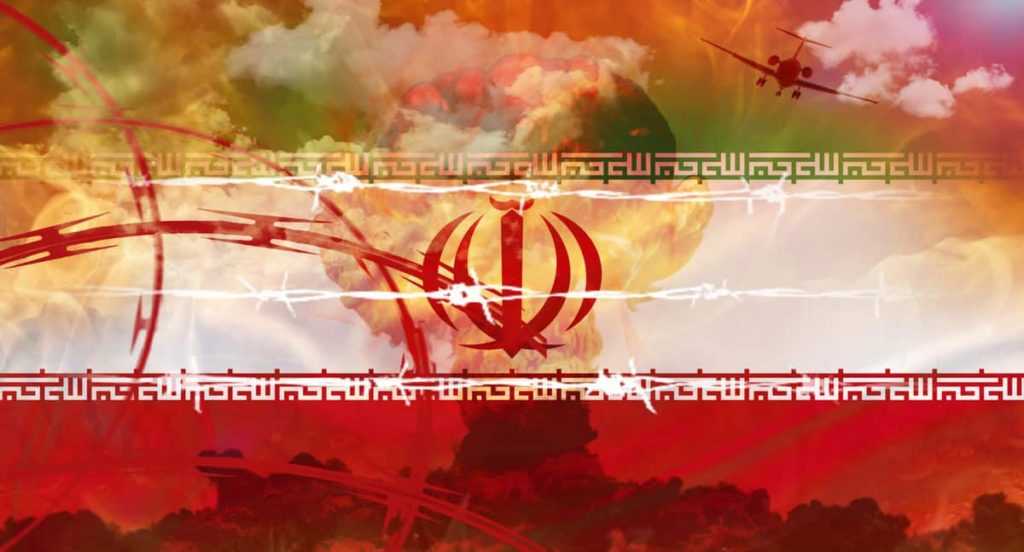
Barbed wire, plane silhouette, and atomic bomb explosion on the background of the Iranian flag. Illustration
We have communicated the terms under which we are prepared to bring the current conflict with Iran to a conclusion. The Iranians have responded by dictating what can only be described as an absurd series of demands of their own. There can only be one reasonable response. We need to stand up, walk out of the room, and then inflict maximum pain.
Anybody who has followed my comments about the ongoing war is well aware that I would not have advised beginning this conflict, and I certainly would not have suggested prosecuting it the way we have. That does not matter now. We are in this. We cannot allow the Iranians to walk away believing they have won. If we do, we will feel the ripple effects immediately worldwide, from Taiwan to Cuba.
The first step in winning is to formulate a strategy that makes sense, maximizes our strengths, and plays on Iranian weaknesses. Our men and women in uniform are the best in the world, but simply directing them to do what they can do operationally, absent a coherent vision of how we intend to achieve our objectives, is irrational and doomed to failure.
Let’s start with these three facts.
First, the Iranians cannot hope to combat the United States Navy and Air Force. We own the skies. We own the open ocean. That means the Iranians do not move a barrel of oil anywhere unless we allow them to. They can load whatever they want on a tanker at Kharg Island, but they still have to sail it out of the Persian Gulf to get it to market. That means anytime we want, we can completely cut off all Iranian oil and gas sales and bankrupt the regime.
Do that. Today. Shut down all Iranian oil and gas sales. Bankrupt the regime. Iran would lose roughly $4–4.5 billion per month in export revenues if it could not sell any oil or natural gas internationally. That money pays for a lot of missiles, drones, and other armaments. Let them figure out how to continue to wage war and feed their people once that income is gone.
And, when we stop ships carrying Iranian oil and gas at sea, confiscate the cargoes and sell them. Keep the money.
Second, the Iranians are not actually attempting to attack our military forces on any significant level. We shoot at them. They shoot at large civilian targets in the Gulf and Tel Aviv. Increasingly, those attacks come in the form of low-cost, low-tech drones, mines, and remotely controlled “kamikaze” attack boats.
Take away that threat. Erect defenses in the Gulf on an emergency basis that will stop drones from getting through. Hunt the units launching them relentlessly, not with multi-million dollar missiles but with the full gamut of our capabilities, including attack helicopters and attack aircraft. Do the same for the attack boats and mine-laying vessels.
Third, the center of gravity in this fight right now is the world economy. The Iranians are effectively holding it hostage. The threat is that they will remove Persian Gulf oil and gas from the market and cause such economic distress that we will be forced to sue for peace. Take away their leverage.
At the same time, we protect the Gulf nations from attack and starve Iran of income, we should ramp up the American oil and natural gas industry on an emergency basis to compensate for the loss of Iranian production. Expand oil and gas here. Drill new wells. Reopen wells not currently producing.
Shale operators can bring new wells online fast. Drilling a horizontal well in the Permian Basin, for example, typically takes 2–4 weeks, with completion (fracking) and flowback adding another 2–6 weeks. That means within 30-90 days, a well that does not exist today can be online and producing.
But we also have a large number of existing wells that are just not producing right now. The US has roughly 4,500–5,000 drilled but uncompleted (DUC) wells across its major shale/tight-oil and gas basins as of early 2026. These are existing wells that, in some cases, could be in operation within ten days to two weeks.
There are also a huge number of idle wells. These have been drilled and were producing, but are currently not in operation. Statistics are hard to come by, but there may be literally hundreds of thousands of such wells. In many cases, these idle wells could be brought back online within days.
What is paramount going forward is the formulation of a strategy that achieves victory by maximizing our advantages and exploiting the weaknesses of the enemy. A great many individuals with no real understanding of how war is waged, or the Middle East, are clamoring for “boots on the ground” and seizing Iranian territory. Neither of those things makes any sense from a strategic perspective. It will only mire us in a conflict that will continue to escalate.
Let’s be smart. Let’s take a moment to think through our next steps in a way perhaps that we did not do initially. Let’s figure out how we win, and they lose.

- We win – they lose - March 26, 2026
- Maybe we ought to worry about these drones - March 24, 2026
- Where was CIA when the President made the decision to go to war? - March 24, 2026