What We Know About China’s and Russia’s New Strategic Bombers

Originally published by The National Interest.
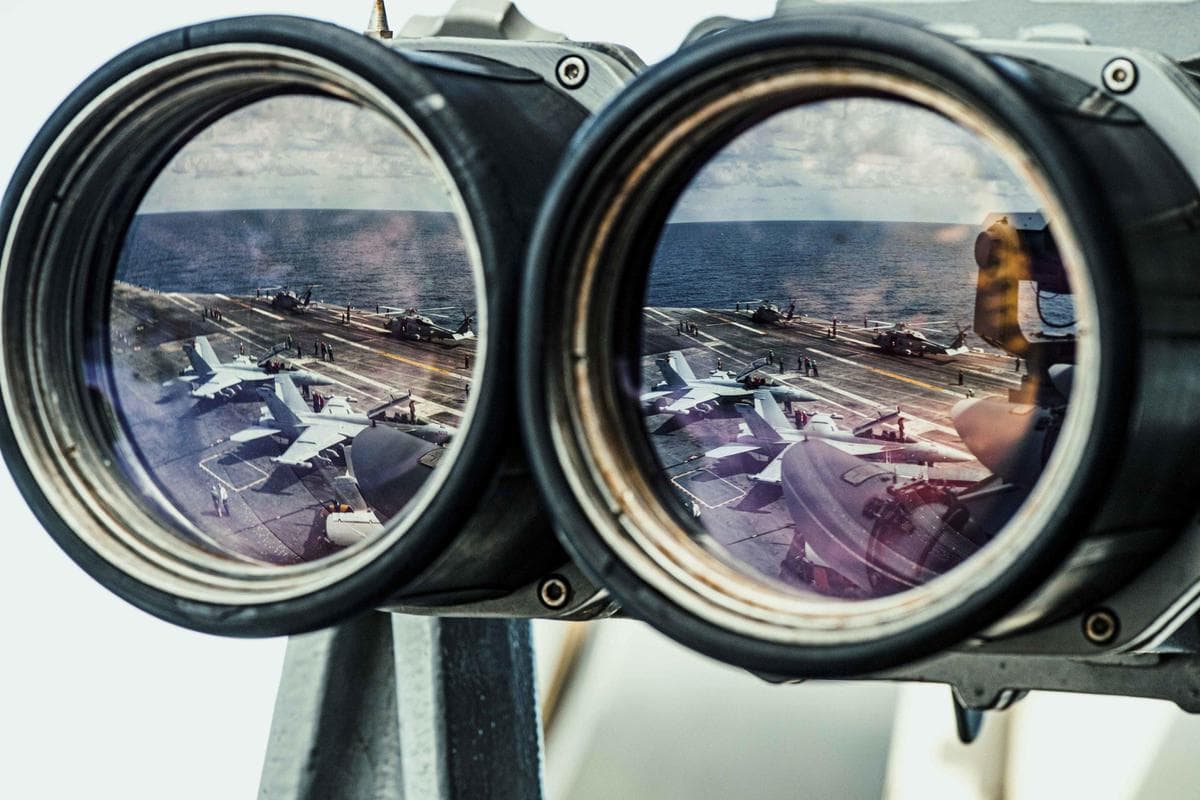
SOUTH CHINA SEA (April 6, 2021) – U.S. Sailors prepare for flight operations on the flight deck of the aircraft carrier USS Theodore Roosevelt (CVN 71) April 6, 2021. The Theodore Roosevelt Carrier Strike Group is on a scheduled deployment to the U.S. 7th Fleet area of operations. As the U.S. Navy’s largest forward-deployed fleet, 7th Fleet routinely operates and interacts with 35 maritime nations while conducting missions to preserve and protect a free and open Indo-Pacific Region. (U.S. Navy photo by Mass Communication Specialist 3rd Class Alexander B. Williams)
As the US Air Force continues to develop its next-generation B-21 stealth bomber series, a deeper dive into near-peer foreign counterparts could be significant. Both Moscow and Beijing are currently fielding their own bomber programs, intended to directly counter America’s dominance in this arena. The American-made B-2 Spirit, B-52 Stratofortress, and B-1B Lancer remain the cornerstone of the Air Force’s bomber fleet and the nation’s air-launched nuclear deterrence strategy. If the Chinese H-20 “Xi-an” or the Russian PAK-DA bombers reach operational capacity before the Raider is introduced, could they compete with America’s existing bomber contingent?
The Chinese H-20
When China’s H-20 is officially fielded by the People’s Liberation Army Air Force (PLAAF), it will serve as its premier dedicated strategic bomber. Earlier this year, imagery depicting a new large combat aircraft was released by Chinese state-run media outlets. Although there is no confirmation that this mystery aircraft was indeed the H-20, the footage depicts a large aircraft featuring a stealth diamond shape and a large central fuselage. Officially, the People’s Republic of China’s trajectory concerning a homegrown bomber series began in 2016. However, analysts believe the PLAAF began undertaking the H-20 project in the early 2000s. Aviation experts believe that the H-20 could be capable of flying at extended ranges of up to 8,500 kilometers, which would allow China to reach well into Japan, the Philippines, and even the US territory of Guam.
The Russian PAK-DA
Although Russia remains embroiled in its war against Ukraine, the Kremlin is purported to be continuously developing its own next-generation bomber platform. The Tupolev PAK DA is being collaboratively designed by manufacturer Tupolev and the Long-Range Aviation branch of the Russian Aerospace Forces. The design stage for the strategic bomber platform reportedly was finalized back in 2019. Initially, sources projected that the PAK DA would reach operational capacity by 2027, but the COVID-19 pandemic and the ongoing Ukraine invasion have certainly extended this timeline. While several artist renderings depicting the PAK DA have been released over the years, very little confirmed information surrounding the bomber has been verified. Some of the obvious features depicted from the few images we have of the Russian platform showcase a flying wing configuration and minimized radar cross-section, similar to the American B-2 Spirit.
The B-21 Raider Is Coming
As geopolitical tensions across the world continue to ramp up, the timely introduction of next-generation bombers has the potential to shift air dominance. The US Air Force is working to introduce the B-21 Raider before Moscow or Beijing can field their own counterparts. From stealth and payload to range and avionics, the B-21 is expected to dominate the skies. The exact specs and details surrounding the Air Force’s upcoming project remain highly classified, but a shortened wingspan and greater firepower would give the aircraft an edge over its already top-tier predecessors like the B-2 Spirit, B-52 Stratofortress, and B-1B Lancer. Only time will tell if the Northrop Grumman-designed bomber will reach operational capacity before its adversarial near-peers.
Read more HERE.

- America’s Supercarriers Are Back in Force in the Pacific - December 30, 2025
- Israel’s $2 Iron Beam Laser Could Disrupt Missile Warfare - December 23, 2025
- US Stands Up New Drone Strike Force in the Middle East - December 9, 2025