A deep dive on Iranian chief negotiator Ghalibaf – the regime’s enforcer

Originally posted by AND Magazine
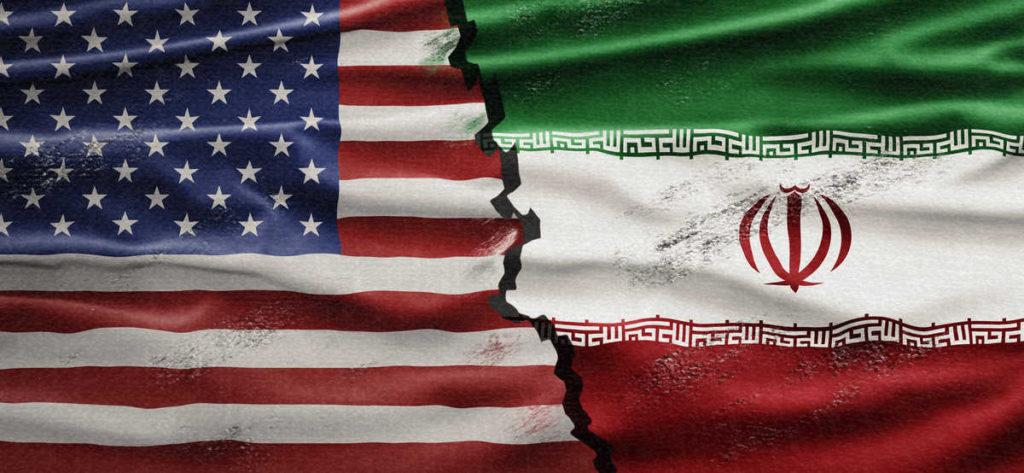
Political relationships. American and Iranian Flag divided diagonally. Partnership and conflicts.
The chief negotiator for Iran in the ongoing talks with the United States is Mohammad Bagher Ghalibaf. He is the Speaker of the Islamic Consultative Assembly (Iran’s Parliament / Majlis). He has held this role since May 2020 and was re-elected after the 2024 parliamentary elections. Since we are told that Iran’s current leaders are more moderate and reasonable than those who preceded them, it seems appropriate to take a deep dive into the background of this central figure.
Ghalibaf has held a wide variety of senior positions in Iran. At one point, he was Deputy Commander of the IRGC Basij Resistance Force. The Basij are charged with internal security in Iran. They beat you in the streets. They also make you disappear.
Ghalibaf created bases for the morality police throughout Iran. The morality police enforce Iran’s draconian laws – on how women can dress, for example. Violators are arrested, beaten, and sometimes killed.
At one point in his career, Ghalibaf was chief of the Iranian National Police. Under his command, the police ran secret detention centers where regime opponents were tortured.
“Before thinking about becoming president, Ghalibaf should think about his numerous actions against the rights of citizens during his command and explain the dark areas of his past,” said Shahram Rafizadeh in an interview with the Center for Human Rights in Iran (CHRI). Rafizadeh was one among a group of journalists and bloggers arrested by the police’s security unit in Tehran when Ghalibaf was the commander of police forces (2000-05) during a crackdown in 2004.
-Iran Human Rights Organization
The detainees were subjected to physical and psychological abuse, as well as prolonged periods of solitary confinement in a secret detention center in Tehran without access to legal counsel or family.
“He was the commander of the unit that detained us,” said Rafizadeh, who spoke to CHRI from exile in the United States. “They had a secret location in Javanan Sq. (in Tehran) and everything that went on there was under his supervision.”
“We were not the only ones who were arrested by the police under Ghalibaf’s command,” Rafizadeh told CHRI. “There were two other cases involving dozens of people, including a lot of movie critics. Many of them met terrible fates.”
“Mr. Ghalibaf was insistent on torturing, imprisoning, and ruining the careers of journalists as well as artists and intellectuals working in the theater and film industry on the basis of my husband’s forced confessions,” human rights advocate Mehrangiz Kar said in a May 2017 interview with CHRI.”
-Iran Human Rights Organization
During his second presidential campaign in 2013, Ghalibaf admitted using brutal force to quell a student uprising at Tehran University in July 1999.
“There’s a picture of me carrying a stick on a 1000cc motorcycle. I was with (radical Basij militiaman) Hossein Khaleghi,” he said during a meeting with Basij militiamen in March 2013. “We were there to wipe the streets clean (of student protesters). We were part of the club wielders and proud of it.”
That’s not the only occasion when Ghalibaf has trumpeted his personal role in crushing dissent. “When the people poured onto the streets and started moving toward the Supreme Leader’s compound, I was the commander of the Revolutionary Guards’ air force. I was on the streets rounding them up. I am proud to be among those who beat them with batons. We have been using batons against Rajavi’s supporters since 1979, and we’ve done it whenever necessary ever since.”
Ghalibaf has bragged about ordering troops to open fire on unarmed protesters.
Ghalibaf helped establish the Basij intelligence apparatus that focuses on identifying, arresting, and countering opposition or protest networks. He also created the 110 Police that respond to protests and suppress dissent, and included a contingent of “morality police.”
The morality police were notorious for coercive, sometimes violent street enforcement of strict hijab rules, culminating in the high-profile Mahsa Amini case and deadly 2022 protests. Tactics later adapted toward surveillance and indirect pressure while the underlying laws stayed in place. International response was swift and sustained, with sanctions, UN findings, and global activism.
On one occasion, Ghalibaf was among a group of 24 IRGC commanders who signed a threatening letter to reformist President Mohammad Khatami, warning that if protests in Iran threatened national security, the IRGC might intervene directly. The letter was an ultimatum to Khatami, demanding he take more brutal actions in response to demands for reform.
“Mr. President, if you do not make a revolutionary decision today and do not fulfill your Islamic and national mission, tomorrow will be so late and irreparable that it is unimaginable.
Finally, with full respect and affection for His Highness, we announce that our patience has run out and we do not consider it permissible for us to tolerate more than that if things are not addressed.”
Ghalibaf was a close friend of the Iranian regime terror mastermind Qassem Suleimani.
In short, Ghalibaf is a thug. He is a creature of the revolution. He has dedicated his life to crushing anyone who dares to challenge the rapid revolutionary theocracy that controls Iran. He is not a moderate. He does not want coexistence. He wants only to destroy anyone in his way.
Ghalibaf may be the man we have to talk to right now. It will not make that challenge any easier to pretend he is something he is not. He’s the regime’s enforcer, and he hasn’t changed one bit.
