Remembering Ambassador R. James Woolsey’s Enduring Service
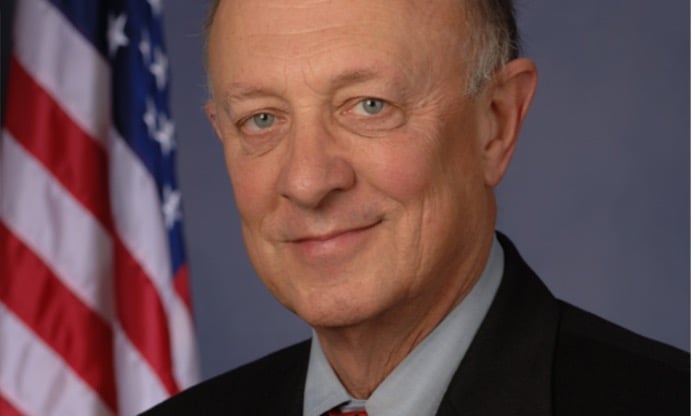

Ambassador R. James “Jim” Woolsey, who died on July 21, 2026, at the age of 84, embodied a vanishing ideal in American public life: the serious, non-partisan public servant who treated national security as a duty rather than a career ladder. Across four decades and administrations of both parties, he brought rigorous intellect, moral seriousness, and quiet courage to some of the hardest problems the United States has faced.
Born in Tulsa, Oklahoma, in 1941, Woolsey was a Rhodes Scholar who moved early into the national-security arena. He served as an advisor on the U.S. delegation to the Strategic Arms Limitation Talks, General Counsel to the Senate Armed Services Committee, Under Secretary of the Navy under President Carter, and later as a key arms-control negotiator with the Soviet Union under Presidents Reagan and George H.W. Bush. As Ambassador and head of the U.S. delegation to the Conventional Armed Forces in Europe talks, he helped shape the post-Cold War security architecture of Europe.
His most visible public role came as Director of Central Intelligence from 1993 to 1995. He led the CIA during the difficult transition after the Soviet collapse and through the Aldrich Ames espionage crisis. Those who worked with him remember a director who refused to seek scapegoats and who insisted on institutional accountability without theatrical firings. In later years he continued to advise presidents and presidential candidates, always from a perspective that prioritized American strength and clarity over political fashion.
Yet Woolsey’s most consequential contributions may have come after he left formal government service. He recognized earlier than most that the threats of the 21st century would not always announce themselves with tank divisions or ballistic missiles.
He became one of the most persistent voices warning that America’s electric grid – the technological foundation of modern civilization – was critically vulnerable, whether from a high-altitude nuclear detonation, a severe solar storm, cyber attacks, or physical sabotage. As Honorary Co-Chair of the Secure the Grid Coalition, he worked to translate technical warnings into policy urgency.
He co-authored both the 2018 and 2019 reports by the U.S. Air Force Electromagnetic Defense Task Force (these LeMay Papers have become one of the most studied works in Air Force professional education). He filed formal interventions at the Federal Energy Regulatory Commission. And he co-authored a series of pointed analyses with the late Dr. Peter Vincent Pry that refused to soften the catastrophic implications of a prolonged nationwide blackout.
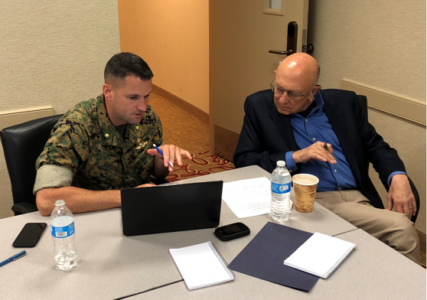
At the same time, Woolsey confronted an ideological challenge he believed was equally serious: the campaign by Islamist movements to advance Shariah as a political-legal system incompatible with the American constitutional order. In 2010, he helped lead the Center for Security Policy’s Team B II project that produced the report “Shariah: The Threat to America.” That document argued, on the basis of the Islamists’ own writings and organizational patterns, that a gradualist “stealth jihad” strategy sought to replace Western legal norms with a totalitarian alternative. The same year, he recorded messages supporting efforts to insulate state courts from Shariah through legislative initiatives demanding “American Laws for American Courts.” He treated these efforts not as culture-war provocations but as necessary defenses of the rule of law and individual liberty.
What united these later campaigns with his earlier government service was a consistent premise: the American Republic is not self-sustaining. Its infrastructure, its legal system, and its culture of ordered liberty require deliberate protection against both technological and ideological threats. Woolsey never claimed that the dangers he identified were the only ones that mattered. He simply refused to look away from those he judged most under-appreciated.
He was not a man of ideological purity tests. A self-described “Scoop Jackson Democrat,” he remained socially liberal while hawkish on foreign policy and national resilience. He could work with Reagan arms-control teams and later advise a Republican presidential campaign without apparent contradiction, because his North Star was the long-term security of the United States rather than the short-term fortunes of any party.
Those who knew him personally speak of a man of dry humor, genuine kindness, and unusual intellectual honesty. He could deliver grim assessments without theatricality and could disagree without personal animosity. In an era that often rewards “clickbait” and grandstanding, he instead practiced humility and professionalism.
But the larger measure of Jim Woolsey’s life is about endurance. He spent more than half a century trying to keep the American Republic capable of defending itself – its people, its infrastructure, and its constitutional character. In an age of distraction and short attention spans, that kind of sustained seriousness is rare. It is also the quality the country needs most.
Ambassador R. James Woolsey has left the watch. The duty he performed so faithfully remains.
