What does victory and surrender in Iran mean?

Originally published by JNS
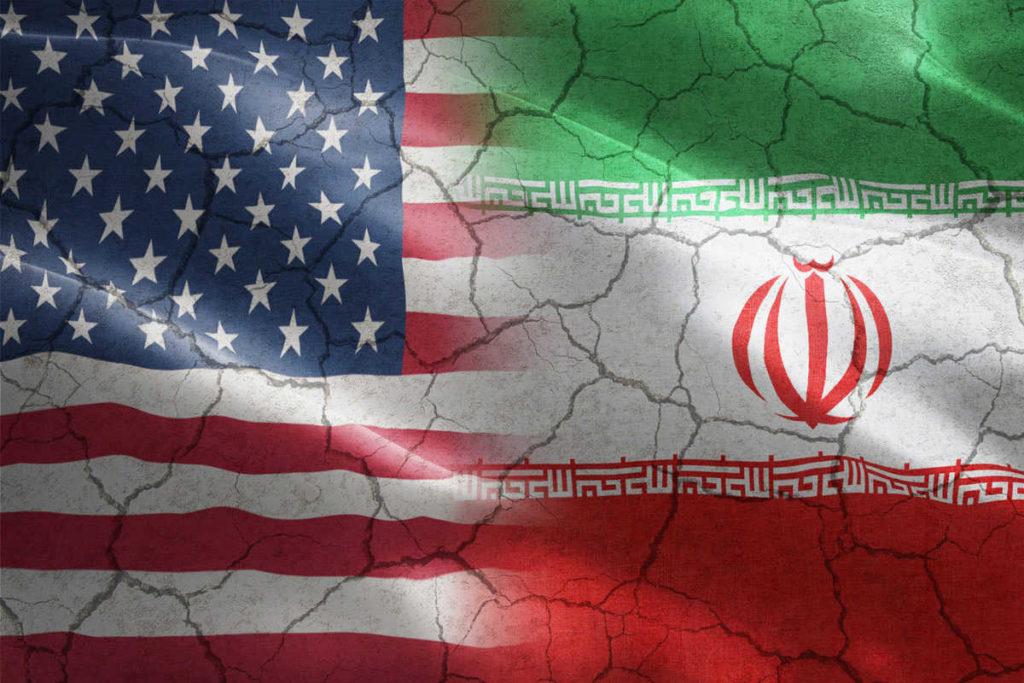
Cracked Flag of United States of America against Iran - indicates partnership, agreement, relationship, military and conflict between these two countries
When President Trump stated that he expects this war with Iran to end with an unconditional surrender, it set off a debate over what that might mean and how it will happen. The answer to how and when the Iranian regime no longer has an option of continuing rests on how one understands the nature of the Iranian regime.
Some believe that regime’s bottom line remains the preservation of the Islamic Revolution. Any compromise could be entertained were it to help secure the longevity and resilience of that revolution. There is indeed the precedent of 1988 when the regime appealed to just that argument to justify agreeing to an obnoxious ceasefire to the Iran-Iraq war. But some never accepted that ceasefire and issued from a different foundation – one which suggests a suicidal end to this regime.
All strands of Iran’s Islamic Revolution are revolutions in Shiism, which generally believed in quiescence detached from mundane power until the 12th Imam returns, which could be a very long time in coming given that he already has been absent for well over a millennium. This works as Shiism endured as a minority across the region. As with other minorities, Shiites navigated to survival through quiescence, invisibility when possible, groveling when necessary, and adoption of political trends to fit in when opportune.
But the Shiites of Iraq became a majority a century ago, and saw a shot at power. Their compatriots in Iran lived intertwined with power as the majority. Both were forced to confront the issue of reconciling faith with possessing mundane power. New thoughts emerged: if indeed the 12th Occulted Imam will not return soon, then perhaps a grand Ayatollah versed more than any other in his age in jurisprudence can operate in his stead informed by his wisdom, if not enjoy direct communication with the occulted Imam himself. The was an Islamic version of Plato’s “philosopher king,” or Rule of the Jurisprudent – the Valiyat e-Faqih. When Ayatollah Ruhollah Khomeini seized power, he established himself as absolute ruler under this system to install the totalitarian rule of Islam. This “rational school” of reigning Shiism was extreme, repressive, sought global revolution and Islamification of the globe. It entered a war to the death with the United States, the great Satan. But the system of the Islamic Revolution was essential – it was the embodiment of the Imam’s rule on earth until his return – so its preservation remained paramount at great tactical cost if necessary. Hence the decision to save the revolution and sign a ceasefire with Iraq in 1988.
But there were others who believed not in this Persian version of the Greek Platonic system of absolute rule; they believed that the collapse of the cursed Shah and the rise of Islam in government heralded the imminent return of the Hidden (Occulted) 12th Imam. They were called Mahdists, since they believed these were end times where the faith of Muslims was being tested on the eve of the great conflagration and final eschatological battle where against all mundane odds, true believers would be led by a resurrected Muhammad and his army of martyrs would join the retuning Imam to defeat the forces of heresy, apostasy and non-belief. Moreover, their faith, they believed, was no passive test; it drove the return of the Occulted Imam, the Mahdi. For them, the Islamic revolution was a mere vehicle to drive the world to the ultimate test of faith and apocalyptic showdown. While Khomeini and his system placed a premium on preserving the system at all costs, this crowd’s focus on triggering the great conflagration and universal destruction threatened the system and even welcomed its and everything’s destruction. So Khomenei repressed this crowd.
The Mahdists were thus forced into the shadows, becoming subversive and violent in the revolution’s early years – culminating in an attack on none other than Ali Khamenei. After being crushed by Khomeini, Mahdists largely had retreated into the ranks of the IRGC forces fighting the Iran-Iraq war and followed the more “mystical” school of Shiite thought in Mashhad rather than the “rational “schools of Qom, biding their time, plotting their future and cultivating their bitterness and steeling their determination.
Meanwhile, Ali Khamenei recovered from his assassination attempt but lacked a genuine base of power to feed his ambition. So, he tapped the very crowd that had tried to kill him, cutting a deal to be their protector in a hostile system in return for which they become his posse. In some ways, it was natural; Khamenei hailed from the area of Mashhad as well. The Islamic Revolution for all its high-mindedness ultimately was a collection of competing posses and mafiosi competitions over political, institutional and even economic turf. So, when Ali Khamenei assumed leadership upon Khomeini’s death in 1989, in part because of the strength of his posse and its popularity in the IRGC, the Mahdists had finally found their haven and launchpad. The Islamic revolution itself underwent a quiet revolution.
Once in power, and borrowing throughout the ranks of the IRGC, these believers – inured to death and destruction by their time in the hellfire of the Iran-Iraq war – had become the power underpinning the throne. They now have been in power for 37 years of the regimes’ 47. They define its top ranks and maintain an iron grip. In varying shades, they are all the most soulless and desensitized veterans of the Iran-Iraq war, and are infused with varying degrees of Mahdist thought.
For this crowd the Islamic Revolution remains a vehicle to trigger an eschatological war to test the true faith of the followers – and the worse the reality they face, the greater the test – and bring about the final battle. Ali Khamenei is dead, but the survivors still hold the power. And they chose Ali Khamenei’s son, Mojtada Khamenei, not because he was the son, nor because they lacked other ideas. They chose him not despite his extreme nature and clear adherence to apocalyptic views, but precisely because he holds those views. For this clique, this war is the final eschatological apocalypse for which they were preparing. The greater the odds, the more certain the victory and sooner the return of the 12th Imam.
When we discuss unconditional surrender, thus, we are not likely going to encounter an orderly governmental surrender as Japan’s did in 1945. None among this crowd sees surrender and self preservation as a value; most see their impending doom as the greatest opportunity to test faith with which one could be gifted.
As such, this regime will not surrender. It must be dismembered. And the only way to do that is to so weaken it that Iranians, as did eastern Europeans or particularly like Romanians with Ceausescu in 1989, will simply seize the reins of government themselves and grip the helm of the ship of state forcefully to avoid going down with these apocalyptic maniacs.
This war will be won by boots on the ground, but not by our boots, but by Iranian boots. The people of Iran are the missing army that has to join the U.S. and Israel to bring this twilight struggle to the death to total victory. They are our greatest weapon at the end of the day. And they appear willing and able, provided we keep the focus of the war on their future.
For those who study early Church history, these are the modern day Circumcellions, an extreme Donatist cult on the 4th century AD who so valued martyrdom that they attacked armies and voyagers, challenging them to kill them in order to satisfy their desire to purify their souls through martyrdom. Needless to say, as the great scholar of Byzantium, George Ostrogorsky, noted, this cult survived only a short while.
So too the Mahdist Islamic Revolution. It’s time their time is up.

- What does victory and surrender in Iran mean? - March 10, 2026
- Qalibaf the monster - March 6, 2026
- David Wurmser discusses Iran with NTD News - March 6, 2026