9/11: Shock and Aftermath
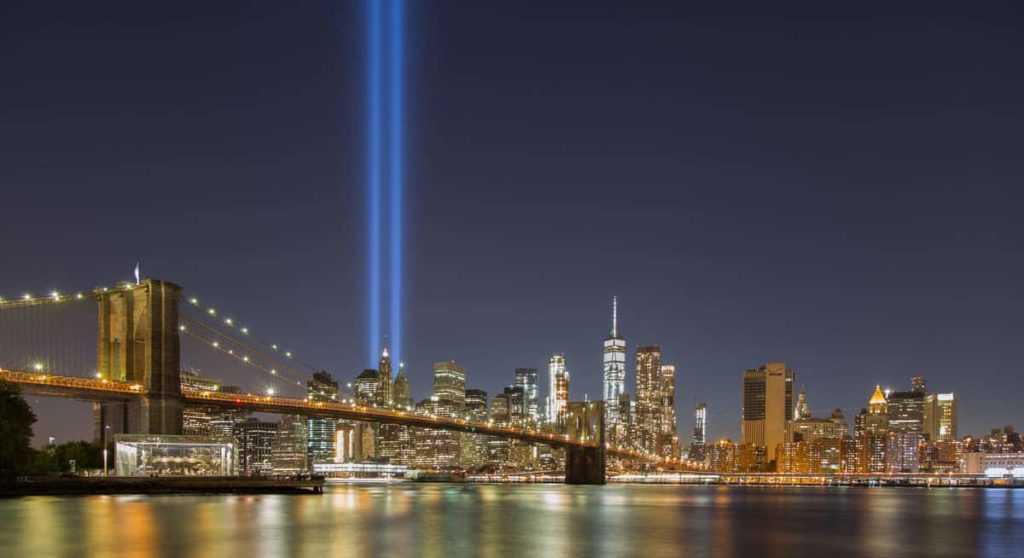

My reflections on the attacks of 9/11 begin with conveying the shock and trauma of that horrible day. One cannot understand with the distance of today how the attack on 9/11 immediately represented a profound strike to the very fiber of American society, a very shock to the idea of normalcy, and a pervasive administering of a sense of imminent threat. It also strangely soon bored in how alone we the United States, were as a nation. We moved toward responding as a sovereign country, but within a short time, it apparent how much of the rest of the world was reacting with genuine sympathy, but even more with the concern that the world in which they had and in which they still lived should resist the change which was inevitable from this attack.
Our allies, and even our enemies, sympathized greatly, but many also feared just as much what we would do as much as they feared the implications of the attack. They did not want to let go of September 10; we had passed over the chasm and were in September 12. And that brought with it a sense of being alone.
But the real story for me was not only the horror of 9/11, but what followed afterwards. America had been at peace. Moderation and normal politics had seemed to govern our nation’s life internally and externally. It seemed as unchanging as the sunrise every day. There were many articles, in fact, in the months prior to 9/11 as to how pragmatic and moderate an era into which the Middle East was evolving. We were, or so it had seemed, entering into an age of small conflicts, “preventative diplomacy” through effective conflict management, and deterrence-based standoff where unsolvable perhaps foremost in the Middle East. We were in a time where great ideas as the engine of geopolitics seemed to have passed through sunset and remained only as a fading memory of the day.
9/11 shook the very foundations of that outlook. But the interesting matter is how we as a nation had arrived at that moment, and how we as a nation reacted.
September 11
I suspect many of my first impressions on 9/11 were much like anyone else’s. At first, it was a background noise from other events gripping our personal lives. We were oblivious, even in the first minutes, to the magnitude of what was unfolding. My world that morning was narrow; my brother’s wife had just gone to the ER in Manhattan to give birth. I was getting dressed to go down to work at the American Enterprise Institute. I was in limbo. Resistance to my being brought into government had stalled my assuming my post for months, and I was still being processed in for my position at the State Department as senior advisor to Under Secretary John Bolton. I used to the time to write; I was hoping still to finish a manuscript before I entered.
So, when my other sister-in-law called me to say, “Did you hear the news?,” I did not even think of a national event but only about my other sister-in-law’s entry to the maternity ward. When she told me about the other news that broke — a plane, which we all assumed to be an errant small private plane, hit the World Trade Center – it almost barely registered. Then, my wife turned on the television, only to see a minute later the second plane hit the second tower. As the images of the passenger jet impact appeared, it was immediately clear we were under attack as a nation.
Although I had already retired in the individual ready reserve (IRR) US Navy only two months earlier, I assumed immediately that I would be mobilized to the Pentagon. I donned my uniform. When I began heading downstairs my wife called out: “you can’t go; the Pentagon’s been hit!” It was surreal, and my immediate answer showed how reality becomes detached. I said, “That cannot be possible, I am supposed to head there now,” as if my intent to go down the Pentagon trumped the reality of the Pentagon’s having been hit. Logic can fail in these moments, as I personally experienced.
I slumped in a daze back into a sofa and watched the horror unfold on the screen when about an hour later, a friend of mine from the Milken Foundation in California who was supposed to pick up a mutual friend, Barbara, at LAX called me confused and asked what the devil was going on since he was getting ready to head to the airport. But, when he checked on status, he said all flights were cancelled.
Our friend, Barabara Olson never made it. At the same time, the first reports were coming in from other friends that the National Maritime Intelligence Center was the center of the Pentagon strike. My Navy reserve unit served on weekends across the building in another intelligence center, the National Military Joint Intelligence Center (NMJIC), but parts of our unit and a sister unit manned on weekends the NMIC as well. I knew that some I knew would be on reserve duty, so the attacks began to assume a rather personal nature for me. As if to drive home the point, another colleague of mine at the time who was processing in to his first government job in the Pentagon called me from New York in a state of shock since he had not been far from ground zero. He simply said he is covered in debris and saw things and smelled things he wished he never had.
The bottom line, as for so many Americans, there were all sort of personal connections to the drama that unfolded, all of which left us both shocked but also strangely focused with a sense of purpose. We were all at war, but it was un a war unlike any other we had faced in generations. It was a war for our homes. War had come to us. Anybody who did not personally experience 9/11, as most of us who lived through it did, simply cannot understand how we felt under attack personally, and neither theoretically nor in a detached way as we had during Vietnam or Iraq in 1991. Perhaps the only comparable sense of personal impact was the Iran hostage crisis which somehow penetrated our souls though few of us know any other hostages.
I never did get to the Pentagon that day, but I did get a call that afternoon from the Office of the Secretary of Defense. One of our nation’s greatest unsung public servants, Ken deGraffenreid, a behind-the-scenes, effective, and unsung hero of the Cold War and one of our nation’s most talented strategists and intellects, directed this curt question at me, “How fast can you get in here; can you get here by early tomorrow morning?” I told him sure, I am already sitting in my uniform, so I can come immediately, to which he said no need for the uniform, but just come as early as you can in the morning.
Early the next morning, I parked downtown to take the subway the last leg of the trip to the Pentagon, knowing it was going to be restricted zone with no parking. As I walked from the parking garage on 17th Street, I saw a searing reminder we were already at war: armored personal carriers were deployed to secure key street corners in downtown DC.
We all waited for the next shoe to drop. None of us thought that the attack was over.
The Aftermath
When I arrived at the Pentagon early on the 12th, it was still an active disaster zone. While I traveled to the Office of the Secretary of Defense suite, it was the opposite side of the Pentagon from that had been hit. Still, the building was burning, body bags and the smell of smoke, burnt materials and kerosene lingered. A black soot covered all the floors and desks. Abandoned desks still as they were, and tables in the cafeteria still ajar as people had left them fleeing in the attack. It was still an active front of war.
As I entered the area of the Office of the Secretary of Defense, I was met by Ken deGraffenried, who had helped the United States achieve one of its greatest victories: burying communism. I asked, “Am I being mobilized?” He answered, “Not really, but yes, sort of.” Basically, the fact that I had entered Individual Ready Reserve (IRR) status only two months earlier meant that all my clearances were current, only the access and passwords to intelligence systems had to be restored. Ken told me that if I am willing, they would like to put me on a consultancy to do a special project, which could start immediately as they can reestablish my access to classified material and issue a password to the systems. As far as the mission, I was told that the attacks clearly were terrorism, and that law enforcement, FBI and intelligence communities would track down the specific people involved that day. But he also said that we needed a different understanding of the nature of the threat, an appreciation of the network behind the attacks, and zero-based analysis of the reigning assumptions governing our view of the terrorists. Essentially, it was a vague mission: figure out the global terror networks, how they interact and what drives and guides them?
I quickly gained access to a back room of the National Military Joint Intelligence Center (NMJIC) to set up shop, gather paper and went to my old gaining command, the DIA to restore access to the computer systems. It was relatively quick and easy, but the higher echelons of the Defense Intelligence Agency (DIA) were deeply suspicious of what I had been sent to do. They viewed it not as a zero-based rethink, but as a political attempt to blame them for the catastrophe. That hostility apparently continued as I got to work, and even after. One unpleasant conversation with a very senior intelligence official already in the first few days revolved around that issue. He expressed suspicion about the intention of my project while I was actually focused on the single question of who had killed us and how big a problem is it – a few terrorists who got lucky, a group far more powerful than we thought, a network of terrorism, or a whole structure of politics that inherently resulted in this horrific event, which was the view of my Ph.D. advisor, Fouad Ajami, outlined to me a few days later – a view he published shortly after in an article in Foreign Affairs[1]: Arab rulers “displaced the furies of their people onto foreign lands and peoples.”
While the suspicions of the DIA did not stop the organization from cooperating with me – professionalism and patriotism still trumped bureaucratic pettiness — it did, however, cause a serious rift in our system as we were entering this war. We were at war, and we were tasked as a government with sorting out strategy, understanding the enemy and navigating allies, all while the building still burned, chaos tugged in every direction, and preconceptions lay in ruins. It was inevitable that there would be strong differences over policy, and it was thus expected that such rifts became ready frameworks repeatedly for subsequent policy battles over interpretation and conceptualization of strategies to respond to the threat. And while it never stopped the intelligence leadership from cooperating with the Office of the Secretary of Defense, it was a sobering exposure to the extent to which our intelligence leadership operated not only in policy terms, but political terms.
Returning to the first days, however, I remained a bit mystified as to my mission, so I stopped by Richard Perle’s house on the way home the second or third evening. As head of the Defense Policy Board, he was one of the ones who had suggested to Ken deGraffenreid to bring me on board to begin with, so I asked him what he imagined was my mission. He gave me two critical insights: Frist, he said, to think of the terror structure like an airport snowed-in with hundreds of travelers stuck in the terminal, and ask, what causes and enables people in varying communities within hours to sort themselves out? How in the chaos do the musicians manage to gather with other stranded musicians, the college professors with other college professors, the sportsmen with other sportsmen, the doctors with other doctors and so forth. They all have their coded language and seem to find each other in the chaos. Second, he said take that concept and apply it to write a new version of a classified project that had governed our understandings of the terror network in the last decade of the Cold War — Professor Uri Ra’anan’s Hydra of Carnage[2] — and a parallel public work by a journalist, Claire Sterling, The Terror Network.[3] There two then became the blueprint of my task, and offered a crisper definition of my mission.
Within a week, Ken deGraffenreid joined my effort to another run by Mike Maloof, who had an operator’s eye in viewing the network. Mike was not a man of desks and board room meetings, but a talented field operative. So, while I approached the work from a more intelligence, academic point of view to craft a strategic understanding of the threat, he sought out the operational structures of the networks to identify its most vulnerable and central nodes with an eye for actually fighting the war. Essentially, we were two parallel and synergistic efforts working in close tandem based on the same tools and insights.
In our room in the NMJIC, we began going thorough hundreds of thousands of intelligence reports, dutifully writing them down as dots and lines on a large papers taped on the wall. We noted the subject, the link to another subject connected by a line, the TD serial number of the report (Telegraphic Dispatch numbers were how these reports were serialized), with time and date on each. A picture soon began to emerge, with thick lines (repeated intelligence linkages), key players and nodes (accumulated dots) for various networks, and the close and peripheral relationships among organizations. Disconcertingly, it looked very much like the papers lining the walls on the office of Professor John Nash in the movie, A Beautiful Mind, where out of his increasingly delusional insanity he sought hidden Soviet codes in radio, TV and magazines. But this was not a quest for hidden connections, this was an exercising in identifying connections operating in plain sight but were never really examined.
What we were seeing glaring out at us through this vast maze of lines and nodes suggested our reigning assumptions had misled us woefully. Two critical assumptions right off were immediately rendered unsustainable: Arab nationalists worked, mistakenly considered “secular,’ often very closely, with terrorists anchored the politics of Islam, and Sunnis and Shiites, the unbridgeable “SUSHI” divide, also worked together.
Both failing assumptions essentially suggested a faulty third: the role of states in the region acted beyond being the victims, bystanders or reluctant employes of terror. In the most benign interpretation, many states had made their peace with the terrorism, and as Fouad Ajami had suggested, were either playing blood money as protection from this underworld or outright tried to channel its energies way from themselves toward the outside world. While there were a few Arab states that were only in the most marginal ways tainted (e.g., Morocco, UAE, Bahrain, Jordan) as they might contribute small sums to various groups to keep them at bay, the vast majority had much greater involvement. Some also to keep the terrorists at bay, but others embraced the terror underworld as the common language of legitimacy and instrument of strategy. There was a state-anchored overlay that jumped out from this vast picture that glared from the pages on our walls.
This third assumption evolved into one of the main rifts rending the US government in the first months of the war – a rift which haunted policy formation for the entire Bush presidency: should terrorism be considered a police action against specific terror groups that would involve cooperation with states (such as Syria, Libya , the PLO), which may be working heavily with other terrorist organizations? Or should the specific terror attack on 9/11 lead us to a broader strategic response to the phenomenon of terrorism against the entire network operationally and strategically against several key, most-offending nations (Libya, Syria, Iraq, Iran and North Korea) and against key players and segments of the government of other states (such as in Saudi Arabia and Pakistan)? In other words, was our response a sharp escalation of our existing paradigm of a police action working with all states in the region against terror groups, or were we to break the paradigm and treat this as an act of war by several key states?
The pages pasted to the wall of the room in the NMJIC suggested the network was intertwined with states, although these terror groups appeared to act often more as guns for hire than loyal national instruments — other than the key Shiite ones aligned with Iran; Shiite groups tended less to be ‘for hire” and more direct instruments of Iranian regime structures. Fouad Ajami was right: The phenomenon no longer lent itself to us as a path to cooperation with states who ideologies were so inimical that it had led them to pursue as their indispensable strategy the phenomenon’s escalation, expansion and export of terror to non-Arab and non-Muslim lands.
Regarding the specific attacks on 9/11 and its attackers, the pages on the wall at the time I left the effort (February 2002) to be clear suggested only marginal, but not entirely non-existent, involvement or at least some prior knowledge, by Iraq. Yes, there were some, especially the Abu Abbas Palestinian group.
However, there were far more grave interactions with Iran, Syria, Libya (Abu Nidal had cooperated with the Millennium plot which involved a lot of the same al-Qaida structures) and Saudi Arabia (especially princes Salman and Naif and their involvement with the Balkan cells of al-Qaida, which evolved into the Vienna cell and Hamburg cell that did the attack, although that was to be expected as being the key players in finance and counter-terror in the Saudi government).
Later, it was apparently discovered – I had moved to the State Department by February 2002 and thus no longer had access to these itnelliegence analyses and subsequent interrogations of al-Qaida captives — that there were more interactions that suggested more direct support for al-Qaida from Iraq, but in the special project I led, Iraq did not have clear operational control over the 9/11 attacks. There was no smoking gun that Iraq had ordered the attacks at its behest. And yet, there was overwhelming evidence of material support for terror, including material support that assisted al-Qaida and indications that some Baghdad-based PLO terror groups were somewhat implicated with the terror attack. Again though, there were also significant such intelligence governing Libya and Syria. Their “secular” (inaccurately described) Arab nationalism did not prevent them from working with terrorists operating from a Salafi/Islamic animus.
And then there was Iran. If two Power-Point slides in my final presentation to the Deputy Secretary of Defense in January 2002 showed some Iraqi involvement, over two-dozen slides showed Iranian and Syrian involvement. And a hefty number of slides showed far deeper Libyan involvement than had been imagined with al-Qaida’s Saudi cells, through the disillusioned remnants of the great Muslim Brotherhood uprising of the late 1920s (tribal resentments do not fade), which raised an interesting historical question: how much was Muammar Qhadafi involved with the 1979 Great Mosque takeover in Mecca?
But returning to the Hydra of Carnage and The Terror Network books of the 1980s, an updated parallel also emerged. In the 1960s, the PLO, had been created as a subversive octopus of Egyptian Arab nationalist leadership that tapped into the unassailable nature within Arab politics of the Palestinian issue to penetrate and terrorize almost every regional nation internally and threaten an Arab nationalist revolution in each. Primarily, it targeted the conservative, more pro-American monarchies, which of course was the intent of its creation by the KGB and Gamel Nasser in 1964, as revealed in the writings and interviews with the KGB’s point man in creating the PLO, Ian Pacepa.
As such, the PLO being so ubiquitous and unassailable, the organization began to fractionalize as each nation started to lay a claim to it parts. The PFLP, the PFLP-GC, al-Saiqa, Abu Nidal, etc. were all created within the umbrella of the PLO by governments who understood the danger and emotive power of the PLO to engage in the Lingua Franca of regional politics expressed through the terror underworld. In other words, the PLO, and Palestinian politics, became first and foremost a vehicle for regional nations to engage in strategic competition with one another. There was no real “Palestine,” only an idea through which all reginal politics was organizing its internal conflicts and external Cold Wars. And it overlay with the global geopolitical competitions.
By the late 1990s – and this is a key assumption our intelligence community failed to appreciate – was that this institution of Palestinian politics as the Lingua Franca of regional discourse had metamorphosized through Palestinian Arabs or PLO graduates into the Salafi and Muslim Brotherhood ideas and organizations becoming the new Lingua Franca through which strategic competitions and discourse was manifested. It was no accident the Hizballah world grew out of Arafat’s Force 17 (Emad Mughniyeh), al-Qaida from Abdullah Azzam, Arab nationalist Palestinian movements became the core of Islamic terror movements. A crisp example of such was the evolution of the PLO’s Fatah factions in the Nahr al-Barid camp in Tripoli, Lebanon into a Salafi structure (Fatah al-Islam) in the late 1990s, and how this faction also formed a foundation for al-Qaida in Iraq and was supported, if not mentored, by the Baathist Syrian regime through a powerful tribal network of Sunni Arabs under its control in eastern Syria and Iraq and led by the urban Arab, Musab al-Zarqawi, from Zarqa, Jordan.
In short, the world of radical Palestinian and PLO politics had transformed into and was also overshadowed by a new umbrella language of radical politics returning to their Islamic origin, and thus it was natural, as happed to the PLO, that this unassailable structure based on the validity of Islam, found itself increasingly fractionalized as each of the region’s nations – Arab nationalist, Sunni, Shi’ite and alike — began to try to lay claim to pieces of it just as they had laid claim to parts of a fractionalizing PLO three decades earlier. In 1978, Bernard Lewis wrote in Commentary in an article, “The Return of Islam,” that Islam always underlay Arab nationalism and its was wrong to call these movements “secular. He observed tough that as the luster of the nationalist Arab veneer faded, the underlying Islamic soul would reemerge, as indeed it did.
Here then, pasted on the wall of the NMJIC, was a visual embodiment of that transition back to its foundations of Arab nationalism into its foundation, its key structure of the Palestinians and the PLO, into Islam and its key structures of Salafism and Muslim Brotherhood. The Hydra of Carnage and Terror Network still existed, and it still had a state-based overlay as well, but it had returned to tis origins and dressed in far more ancient garb. And as the politics of Palestinian radicalism was too emotive for states in the region to ignore, fractionalize and seek parts of to pursue their own regime strategies and goals, so too did the emerging world of Islamic politics offer and demand the same treatment by states.
Within a month after we stood up the special project at the Pentagon, Mike Maloof was detached to pursue the more operational concept in his own cell to strike the networks our walls of paper had revealed. But before we did, Ken deGraffenreid sent the two of us down to a military base down Dalgren, Viginia which at the time was still classified but subsequently has been made public.
We rolled up our pages and sent them forward to the base to brief the team there, which is where advanced concepts of warfighting and strategic preparation for taking down national adversaries were being formulated. In other words, it was where a nation’s networks of electricity, transport, communications and so forth were mapped out to plan an assault against an enemy. When we laid out our pages, it was apparent to both sides that we were doing for terror networks what Dalgren had been doing in planning wars. We had provided the physical map of the terror network that could also become a map of its demise, as Mike Maloof had imagined from the start tactically and as I had imagined from the start strategically. It was clear what Ken deGraffenried was after.
Reflections
At the end of the conversation in Dalgren, we and the military leadership mused on how difficult this was doing this manually on paper, and that perhaps the new technologies of digitization could be leveraged to computerize this opus magnus. We all agreed, to Ken DeGraffenried’s enjoyment, that it would be a great national asset were this method of mapping out the adversary and planning attack force structure digitized on this (I believe this is what Dave was trying to say but could be wrong?). Not only could far more information be included, far more granularity achieved, and far less time spent, but a far more powerful tactical and strategic plan could be formulated far earlier even in advance – indeed years in advance – of a war that would employ them. The military leadership in the room basically concluded and presented to Ken that there is a real requirement for the Pentagon to turn to contractors to develop such a capability.
I probably will never know, but it is possible that this moment was the genesis of the concept and military requirement that triggered a process that eventually led to the formation of Palantir. It is impossible to know; I could well imagine we were not the first to think of digitizing such strategic and tactical planning. But on the other hand, both Ken deGraffenried and Richard Perle were involved in both our effort and eventually with Palantir and Peter Thiel.
And there were a lot of extremely talented people around who also were involved. Indeed, one very talented air force colonel was leading the intelligence hunt for the Office of the Secretary of Defense to find bin Ladin, and sought experts on the study of horses to join the team. Why? Because bin-Ladin, and bin-Ladin alone, had horses, not donkeys. Find the horse excrement, and you’ve found bin-Ladin. Those days were intense, but it was an immense pleasure to see how creative, talented and determined many my colleagues were.
Signs of trouble
After Mike Maloof left the cell, I was alone only for a week. I drew in two new officers who had served with me in my US Navy intelligence unit, whose names I will not mention, though one became a Democratic Congressman from Pennsylvania and the second a professor in a major university in the Atlanta area.
The arrival of my two brothers in arms, however, provided a disconcerting insight. One was a professor of political science in a major university in Pennsylvania; the other was a professor of Russian history. Both were wary of joining me, arguing that neither had any scholarly background in the Middle East.
And yet, they were exactly whom I needed.
Having seen the consequences of the strange, ideological nature and world of paradigms and scholarship that our elite institutions had produced regarding Middle East studies, I saw their lack of initiation in the field as an advantage. Unencumbered by the distorted world of Middle East Studies, but informed and trained in intellect by the wealth of knowledge from Russian history and historical political knowledge, the two proved the perfect agents to produce a genuine zero-based analysis of the Middle East and its politics, and to carry on the project after I left to the State Department in February 2002.
In other words, the final indictment from 9/11 was not only our the ossification of our governmental intelligence and policy institutions, but something more dangerous. They were consumers of students from our elite universities, but those elite universities and the Middle East Studies departments that proliferated among them, had become not a national asset but a national failure. In many ways, they more than anyone failed us on 9/11.
At the time of 9/11, my office in the American Enterprise Institute was next to Michael Ledeen’s, who was finishing his book on Machiavelli. He too was personally affected by 9/11, and it was through him and his wife, Barbara, that I even knew Barbara Olsen who perished in the Pentagon attack.
Because it was impossible to associate for more than five minutes with Michael Ledeen without being given a diet of intellectual input and reading assignments, I was immersed in reading Livy, Tactus and Suetonius, as well as Sebastian de Grazia’s book on Machiavelli (Machiavelli in Hell) at the time. Again, proximity to Michael Ledeen would not have allowed it any other way at that time of the attack. But it was exactly what I needed to be exposed to at that critical moment.
One thing struck me more than any other reading Tacitus, Livy and Suetonius, and then also Sir Edward Gibbon’s Decline and Fall of the Roman Empire: shocking national calamities inflicted on a nation by an enemy rarely are a function of the enemy’s achievement as much as they are a dangerous warning sign, a klieg light, signaling internal national decay.
The disaster that befell Rome in the Battle of the Teutoberg Forest was not a testament of Germanic tribal arms as much as it was a signal of Rome’s internal rot. The Emperor’s most talented general and close relative, Germanicus (from whence the name of the area was derived) knew that Rome had the power to avenge the catastrophic defeat and annihilate the Germanic tribes who inflicted it. The power of Rome was a powerful sedative against worrying about the decay of Rome. While Germanicus agreed to travel north to deliver this great victory, his warning rang hauntingly that until the Cincinnatian spirit of Rome was reestablished and the Senate restored over the dictatorship, Rome is only cashing in its amassed power to cover its terminal decline. It struck me that the catastrophe of 9/11, more than a lesson of strategy, intelligence or policy, was first and foremost a warning sign. Indeed, the failure of our elite institutions to produce young scholars in Middle East Easte studies that had not forgotten if not wholly rejected Western civilization, even more so drove home a chilling point. As with Germanicus, we as a nation had such eclipsing power that we would obliterate our enemy; but that also masked the dangerous decay in our nation that had led to such a disaster.
And one element of the decay was something another advisor of mine, Professor Robert Tucker of Johns Hopkins/SAIS, from graduate school had once noted. Upon his retirement from public and scholarly life, he interviewed in the late 1990s journal he initiated, the National Interest. He was asked what was the greatest change from 1945 when he came to Washington. His answer was incisive. He came, he said, to a town of great ideas. Great mistakes were made, but we were fearless and just made other great decisions based on great ideas to fix them. But since Vietnam, fear had crept in, caution seized the bureaucracy. With great ideas came great accountability. So Washington had become a nation of small ideas. It was dying a slow death. There were no great failures, but so too was the fearless horizon of American imagination contracted. If the trajectory were not altered, America no longer thought in grand terms, and it was thus on the path to becoming a mediocre cautious country. As we began to think of strategy and policy in the wake of 9/11, this warning haunted me. Our response had to be as great as the nation we still were and needed to remain.
The horror of 9/11 was not only a surprise attack. As the special project I conducted exposed, it was also a warning sign, ultimately, of an internal decay that could be ignored at our nation’s peril. It demanded, as much as the required erasure of those who had done such a crime against us at was done on 9/11 was essential, a national effort to restore the civilizational foundations of our republic. The writing had been on the wall. Had we remembered ourselves and who were as a civilization, had we educated our youth accordingly, we would thus have had better focus in understanding our enemy, and we would have been better prepared.
It was all hidden in plain sight.

- Why One Red Sea Strait Matters to Global Trade: Wurmser - September 18, 2026
- 9/11: Shock and Aftermath - September 17, 2026
- Iran 2026, Soviet Union 1989? - August 20, 2026