Are we making this up as we go along?

Originally published by AND Magazine
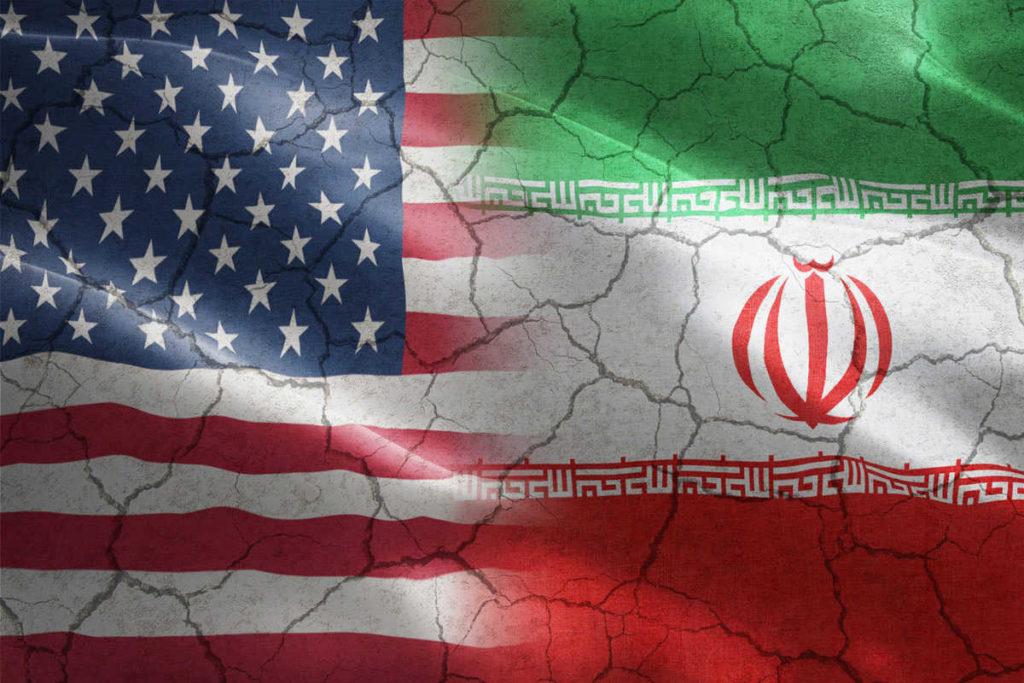
Cracked Flag of United States of America against Iran - indicates partnership, agreement, relationship, military and conflict between these two countries
Why Iran Still Won’t Quit
Several months ago, we started a war with Iran based on the assessment that an intense air campaign focused on decapitation would topple the regime in Tehran and end the Islamic Republic. That did not happen. That was never going to happen.
After some delay, we then imposed a blockade of the Persian Gulf to cut off Iranian oil exports. This time, the thesis was that this would bring Iran to its knees because, in a short period of time, its oil wells would have to be shut down, and that this would quickly lead to catastrophic damage to those wells. The Iranians would be unwilling to accept this. They would be forced to the negotiating table within weeks.
President Trump on Fox News’s The Sunday Briefing
This did not happen. It was never going to happen.
Why?
To begin with, there never was the immediate danger of long-term damage to oil wells that “experts” predicted. It’s not that simple. The Iranians have dealt with this kind of situation before. They have learned to cycle their wells, that is, pump some for a few weeks, then shut them down briefly while they pump others. This prevents them from having to shut down all wells at the same time for a long period of time and minimizes damage to the wells.
Also, it turns out that even wells shut down for a long period of time can often be brought back online relatively quickly. There are some complications, and there may be some drop in production, but wells that have been sitting dormant can be and are brought back online all over the world with some regularity.
As the Journal of Petroleum Technology observes, “For the prolific conventional fields in the Middle East, there is very little technical concern about shut-ins and startups.” We know, for example, that Iranian production rebounded quickly from low levels following the Joint Comprehensive Plan of Action in 2016 and post-COVID in 2023.
In short, all oil is not the same. Turns out, in fact, that there are significant differences in the kind of oil found around the planet and the conditions under which that oil is produced. In some places, relatively brief shutdowns of wells may produce real issues. Iran is not one of those places.
Restarting a well often depends on factors like the amount of wax and water in the oilfield. Iran is not known to be a particular problem area in this sense, but even when issues arise in restarting a well, there are a whole host of known techniques that can be used to deal with these problems. The representation that Iran’s wells would somehow be “ruined” if they stopped pumping was simply never true.
Drop Site News
Meanwhile, the Iranians have utilized a wide variety of techniques to continue getting oil to market and to continue making money. A large amount of oil was prepositioned by Iran in tankers off the coast of Malaysia. Estimates are as much as four months’ worth of production. This oil continues to be sold to China. Eventually, this supply will run out, but in the meantime, the Iranians are making a lot of cash to fund their war effort.
Keep in mind as well the time lag involved here. It can take a tanker two months to get oil to market. It is sometimes another two months before payment for that shipment is received. That means it may be four months after the last of the oil floating off Malaysia is sold before the Iranians actually stop receiving funds.
The Iranians are also getting oil out to market in other ways. They are mixing it with Iraqi oil and selling it out of Basra with false documents. They are sending it by land into Pakistan. None of these approaches the volume of Iranian pre-war exports, but it does bring in some cash, and it does allow wells to continue to pump and eases the strain on storage facilities.
All of which brings us to a key question. Whose advice are we following in formulating our strategy in this war? Individuals who know the Iranians certainly knew that a decapitation strategy was going to fail. Were they consulted? The United States has a huge energy sector. There are any number of individuals in the country with long experience in the Middle East who knew that the idea that Iranian oil wells would “explode” within days of being shut down was nonsensical. Were they consulted? If not, why not?
Who exactly is providing the supposed intelligence on which we are relying? Anyone? Or are we making this up as we go along?
