The Pakistanis and the Chinese break the blockade of Iran

Originally published by AND Magazine
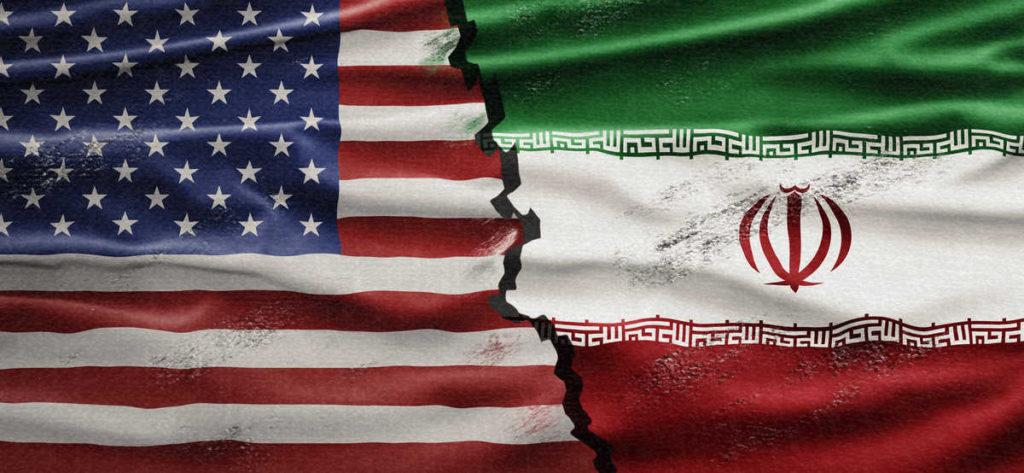
Political relationships. American and Iranian Flag divided diagonally. Partnership and conflicts.
On April 19, 2026, the U.S. Navy fired on the MV Touska, a container ship trying to run the blockade and deliver yet another shipment of sodium perchlorate from China to Iran so it could produce more solid rocket fuel for its ballistic missiles. That action closed off that critical resupply route for Tehran.
The Pakistanis, in league with their Chinese allies, have now opened another resupply route. Or six.
Under a new order, Pakistan has designated six routes for transit trade to Iran, including corridors linking Karachi, Port Qasim, and Gwadar with the Gabd and Taftan border points.
The designated routes are Gwadar-Gabd; Karachi/Port Qasim-Lyari-Ormara-Pasni-Gabd; Karachi/Port Qasim-Khuzdar-Dalbandin-Taftan; Gwadar-Turbat-Hoshab-Panjgur-Nagg-Besima-Khuzdar-Quetta/Lakpass-Dalbandin-Nokundi-Taftan; Gwadar-Liari-Khuzdar-Quetta/Lakpass-Dalbandin-Nokundi-Taftan; and Karachi/Port Qasim-Gwadar-Gabd.
The Pakistani order creates rules and procedures allowing for the transit of goods consigned to a third country. That means the new transit routes have been explicitly created to allow for the transit of goods coming from somewhere else, not from Pakistan.
The order also allows for something called cross-stuffing, or the transfer of goods from one container to another or through another mode of transportation, in accordance with customs laws and regulations. That means the point of origin of the goods can be further obscured, because containers can be opened in Pakistan and material can be shifted around and comingled.
Containers from China have been stacking up in Pakistani ports since the blockade went into effect. At least 3000 containers from China have been reported sitting in Karachi with no way to make it into Iran. No more.
The scale of what is about to enter Iran may be difficult to comprehend. So far in April 2026, one Pakistani port alone, Gwadar, has handled 11,000 shipping containers. It handled 8300 containers in all of 2025. Iran is not just looking to import goods from China, however. It is aiming to export oil to China in violation of the ongoing American blockade. In May of 2025, a rail corridor opened connecting Iran and China. While the Iranians cannot hope to move the amount of crude oil via this route that they exported via the Straits of Hormuz, every load of oil that makes it out via this mechanism helps dilute the impact of the blockade.
“Iran is circumventing U.S. sanctions by shipping oil to China via overland rail routes, bypassing the Strait of Hormuz and American naval oversight in the process. The rail corridor—operational since May 2025—slashes transit time from roughly 40 days by sea to just 15 days, allowing Iran to move crude more quickly and securely while avoiding potential interdiction by the U.S. Navy. Tehran aims to scale up these exports significantly, with pre-crisis daily shipments averaging around 2 million barrels per day. According to The Wall Street Journal, Iran has now begun actively exporting crude oil to China by rail as it grapples with U.S. sanctions, a recent maritime blockade, and domestic storage shortages caused by the ongoing regional conflict.”
The Informant
Imposing a naval blockade of Iran was a critical step in tipping the strategic balance in this war in our favor. It was not enough. The regime in Iran is intent on prolonging this conflict and betting that American public opposition to the war and the economic impact on our allies will force us to make key concessions. We need to increase the pressure.
Each one of the six overland routes from Pakistan into Iran, over which Tehran hopes to bring critical goods, has chokepoints that can be exploited. A bridge taken down in a remote area means no more sodium perchlorate for missiles or electronics for drones from Chinese manufacturers. Bridges can be destroyed faster than they can be rebuilt.
In fact, Baluch separatists in the area through which this truck traffic flows in Pakistan have taken out bridges in the past. The terrain on the Iranian side of the border is the same. There are numerous vulnerabilities.
One such location on the Iranian side is right after the Mirjaveh border crossing on Road 84 (the continuation of Pakistan’s N-40). Just inside Iran, shortly after Mirjaveh, heading toward Zahedan, the road crosses several small desert wadis and dry riverbeds. A bridge over one of these seasonal waterways — particularly in the rugged, remote stretch between Mirjaveh and the next major checkpoint — would be a classic choke point. In this empty desert terrain, there are almost no alternate routes. Bombing even a modest concrete bridge there would stop heavy truck traffic cold until it was rebuilt.
Similarly, the rail lifeline Iran hopes to use to bring in at least some revenue from oil sales can be easily severed and kept out of action. Not only will such attacks have an immediate practical impact, but they will send the necessary psychological message. We are not letting up. The pain will increase until you face reality and talk seriously.
The Pakistanis and the Chinese think they have a way to break the blockade. Time to disabuse them of that notion.
