Who stole 15 robot crop dusters and why should you care?

Originally published by AND Magazine
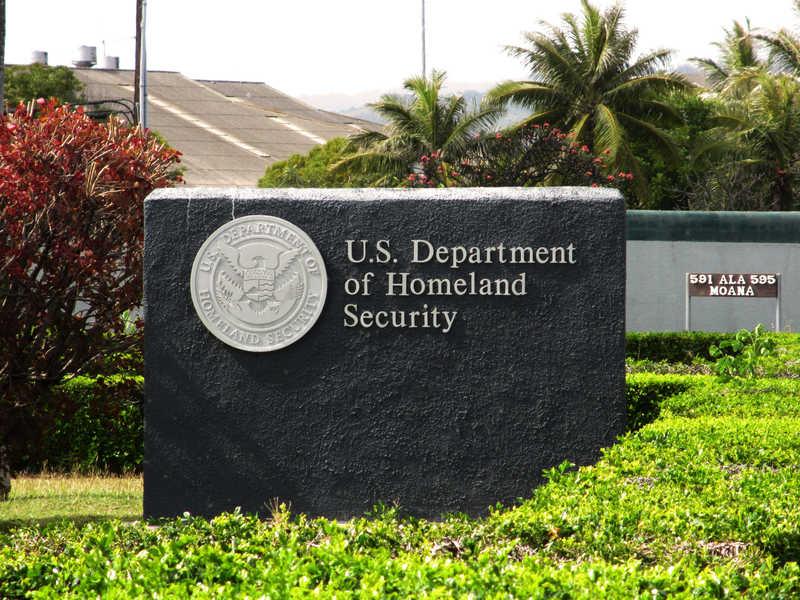
US Department of Homeland Security - Sign on Oahu, Hawaii.
Current and Future Air Threats to the U.S. Homeland, 2002 National Intelligence Council
Since 2002, robot crop-dusting drones have come into widespread use. Fifteen of them were stolen in March in New Jersey. The FBI is investigating, but so far has apparently made no progress in recovering them. National security experts are worried. They should be.
These are not small hobby-style quadcopters. These are heavy-duty agricultural sprayers capable of carrying and dispersing large volumes of liquid precisely over wide areas via GPS-guided paths.
Retired FBI agent Steve Lazarus told the High Side, which broke the story that the FBI is “freaked out for a good reason,” noting these drones excel at quick, precise coverage — ideal for nefarious dispersal over populated areas.
The specific drones stolen are Ceres Air C31’s. They can disperse 31 gallons of liquid in about 7 minutes. They can lift roughly three hundred pounds.
As noted above, the threat from terrorist use of crop dusters has been understood for some time. These drones are meant to disperse chemicals to kill insects that are very similar in many ways to chemical weapons used against humans. They are killing machines, and in the wrong hands, it is people they can kill.
The “agents” such drones can spray if in the wrong hands, would include:
Nerve agents such as Sarin or VX. These are among the most toxic substances discussed in threat assessments. They are liquids that can be sprayed or aerosolized directly from crop-spraying equipment. They inhibit nerve function almost instantly, causing convulsions, respiratory paralysis, and death within minutes (even from tiny doses via inhalation or skin contact). VX is particularly persistent and lethal in microgram quantities; sarin is more volatile but still highly effective in aerosol form. We know for sure that Al-Qaeda and other terrorist groups have been interested in this kind of weapon. Analysis of agricultural drones shows they are “particularly well-designed for chemical weapons delivery” due to built-in tanks, pumps, and nozzles. A small payload (e.g., tens of gallons) could still cause mass casualties in a targeted crowd, stadium, or urban area.
Biological agents, especially aerosolized anthrax (Bacillus anthracis) spores in liquid suspension. This is the single most frequently cited “nightmare scenario” in crop duster threat assessments. Spores can be suspended in a liquid slurry and sprayed as a fine mist, creating inhalable particles that lodge in the lungs. Inhalational anthrax has a very high fatality rate (up to 90% untreated; still deadly even with antibiotics if not caught early). It is stable, persistent in the environment, and requires far less material per casualty than chemicals (e.g., analyses note 10 grams of anthrax spores can match the lethality of a ton of sarin under ideal conditions). A single spraying pass over a populated area could potentially infect thousands, with effects appearing days later. The drones in question would not need to be modified in any fashion to spray anthrax.
Toxic Industrial Chemicals (TICs) and certain agricultural pesticides. These would be much easier to get a hold of and still very dangerous. These would include chlorine, which is used widely for water treatment and in industrial processes and acts as a choking agent; ammonia, which is available in bulk in farming areas and can cause choking, blindness, and lung injury; and a whole range of other pesticides.
Many of these pesticides are of particular concern because they are chemically related to nerve agents. In high concentrations via aerosol, they lead to symptoms like convulsions, respiratory failure, and death (though generally less potent than military-grade agents). Skin absorption and inhalation are both risks.
In fact, there are an almost endless number of common industrial materials and compounds that could be acquired in bulk and dispersed by a crop-dusting drone without any modification to the machine. Phosgene, cyanide, and paraquat are only a few. If you tried to buy them in bulk without an explanation, you might find it difficult, but presumably, a terrorist group that can steal 15 robot drones would have the wherewithal to steal chemicals as well.
All of this is, of course, of particular concern right now because we are at war with the terrorist regime in Iran. The new strongman in charge there appears to be Ahmad Vahidi, head of the Iranian Revolutionary Guard Corps (IRGC). He was previously the head of the Qods Force within the IRGC, the outfit that specializes in working with groups like Hezbollah and carrying out terrorist attacks abroad. Crop-dusting drones spraying nerve agent over a baseball stadium in New York or New Jersey would be right up his alley.
We need to find those drones right now, and we need to be very concerned until we do.
