‘Tools and dupes’ – George Washington warned about foreign subversion
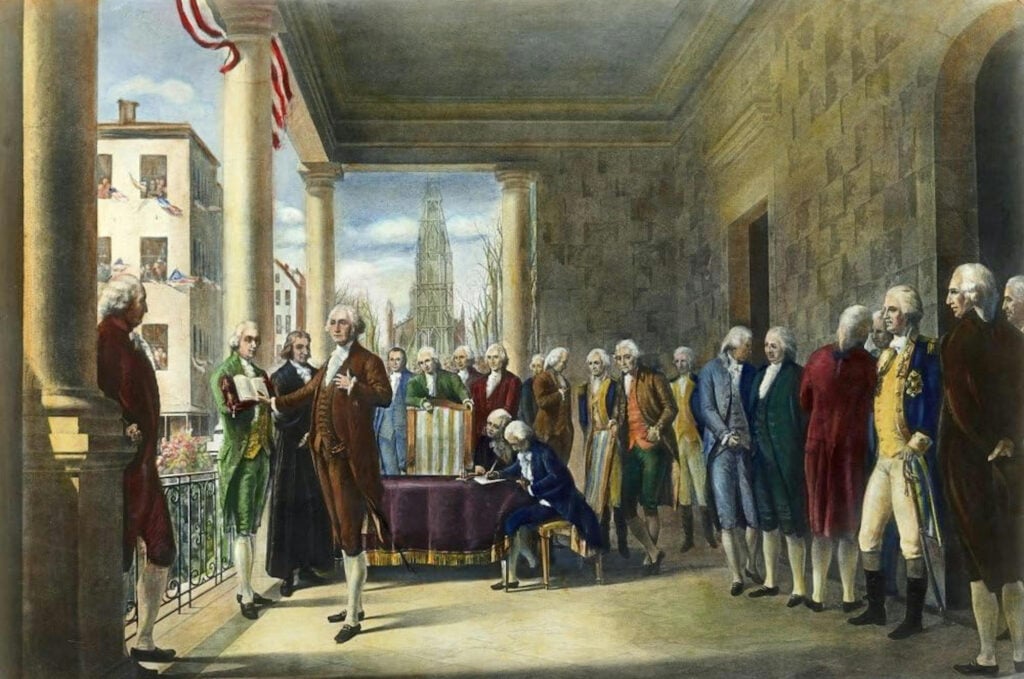

How can the United States have an America First foreign policy, or even maintain its own sovereignty, if foreign powers seduce or enrich citizens and policymakers to influence decisions?
So “insidious” was the problem in George Washington’s time that the first president warned about it in his 1796 Farewell Address. Britain, France, and other empires were buying influence within the new American republic, fueling factions against one another to the foreign power’s own advantage.
Most Americans, if they know about the Farewell Address at all, can only cite Washington’s caution against “entangling alliances” abroad. The first president’s argument went far more deeply than that.
His greater concern was foreign subversion of public opinion and politicians. Washington warned of what he called “tools and dupes.”
The great European empires found it advantageous to divide or co-opt the new American republic. Sometimes they worked through sentiment. Sometimes with money.
Influence campaigns, of course, are a normal and coherent element of any rational statesmanship to wage conflict short of war. Countries are foolish not to conduct them.
Countries are equally foolish not to defend against them. The United States fundamentally lacks a strategic defense against foreign influence. It almost always has. Our lack of defense against foreign influence is not the fault of foreign influencers. It is the fault of those who since the American founding, and especially over the past century, have looked the other way.
“Against the insidious wiles of foreign influence,” Washington warned as he made a public farewell, “the jealousy of a free people ought to be constantly awake; since history and experience prove that foreign influence is one of the most baneful foes of republican government.”
“But that jealousy, to be useful, must be impartial; else it becomes the instrument of the very influence to be avoided, instead of a defence against it.”
In his handwritten manuscript, interlined within parentheses, Washington pleaded, “I conjure you to believe me, fellow citizens.”
The first president was arguing for what amounts to ideological counterintelligence in defense of American founding principles.
Any competent counterintelligence strategy anticipates and responds in kind to the foreign regime pursuing his own sovereign interests. That same professionalism should require action against, as Washington indicated, the willing American targets and their dupes, and to a negligent nation.
Washington’s great generalship on the battlefield was heavily due to out-spying the British. As president, he saw foreign subversion, propaganda, and disinformation already attacking our new republic.
“As avenues to foreign influence, in innumerable ways, such attachments are particularly alarming to the truly enlightened and independent patriot,” he said. “How many opportunities do they afford to tamper with domestic factions; to practice the arts of seduction; to mislead public opinion; to influence or awe the public councils!”
Washington was pleading for America First. In his words, “a passionate attachment of one nation for another produces a variety of evils. Sympathy for the foreign nation facilitating the illusion of an imaginary common interest in cases where no real common interest exists, and infusing into one of the enmities of the other, betrays the former into a participation in the quarrels and wars of the latter, without adequate inducement or justification.”
Inordinate foreign attachments, whether through vanity, ambition, corruption, or delusion, would often earn public praise.
Washington cautioned that foreign influence “gives to ambitious, corrupted, or deluded citizens” the “facility to betray, or sacrifice the interests of their own country, without odium, sometimes even with popularity; gilding, with the appearances of a virtuous sense of obligation, a commendable deference for public opinion, or laudable zeal for public good, the base of foolish compliances of ambition, corruption, or infatuation.”
Meanwhile, the few who tell truth to power – those whom Washington called “real patriots” – would suffer personally and professionally.
Then as now.
Washington’s near-forgotten words, with “Patriots” capitalized, remain immortal: “Real Patriots, who may resist the intrigues of the favorite, are liable to become suspected and odious; while its tools and dupes usurp the applause and confidence of the people, who surrender their interests.”
Foreign tools and dupes get the applause and trust of a people who surrender their sovereignty. A problem as old as our country.

- Laughter of recognition echoes from the realest spy novel in years - August 28, 2026
- AI has an anti-semitism problem - August 25, 2026
- President Trump renews JFK’s forgotten war against subversion - July 30, 2026